
Micro VCs vs. Traditional VCs: Which Is Right for Early-Stage Founders?
A practical founder guide to choosing micro VCs vs traditional VC funds, check size, speed, follow-on support, and a simple decision worksheet.
December 16, 2025
Why are some startups called unicorns? Discover the meaning of private market valuation, the role of VC-backed rounds, and why some billion-dollar firms fail.
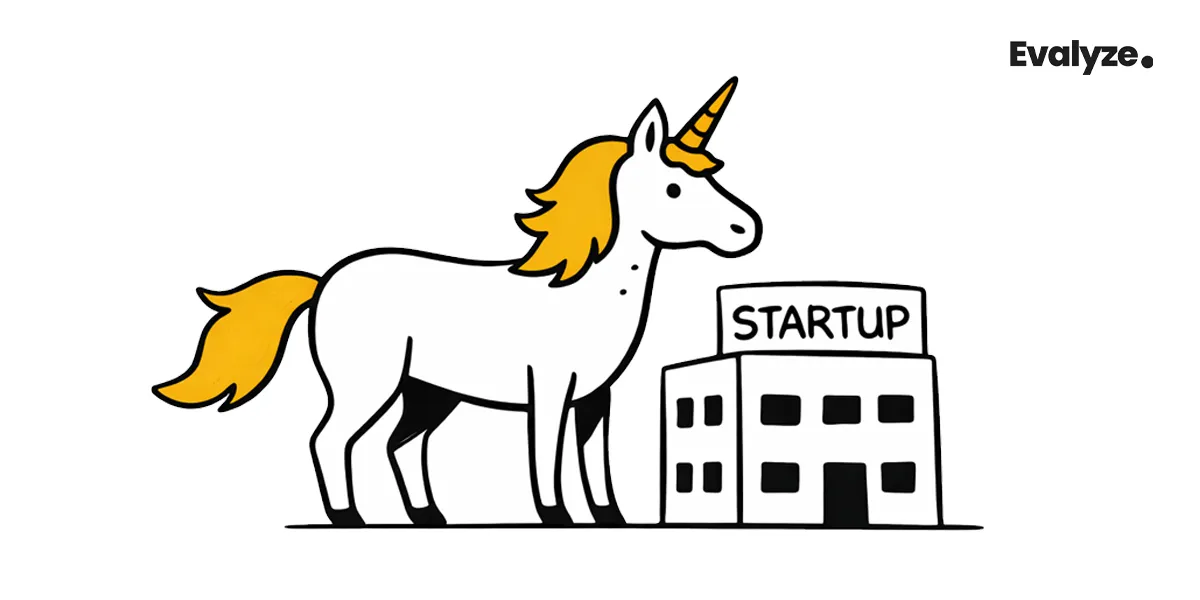
In the world of venture capital and tech entrepreneurship, few terms carry as much weight as unicorn startup. But what does it actually mean, and why does it matter? Whether you're a founder, investor, or just startup-curious, here's everything you need to know.
Key Takeaways
The term "unicorn startup" was coined in 2013 by venture capitalist Aileen Lee. She used it to describe privately held startups that are valued at $1 billion or more.
At that time, it was very rare for a company to reach such a high value without "going public" (selling shares on the stock market). Because it seemed almost impossible, she used the unicorn, a mythical creature, as a metaphor.
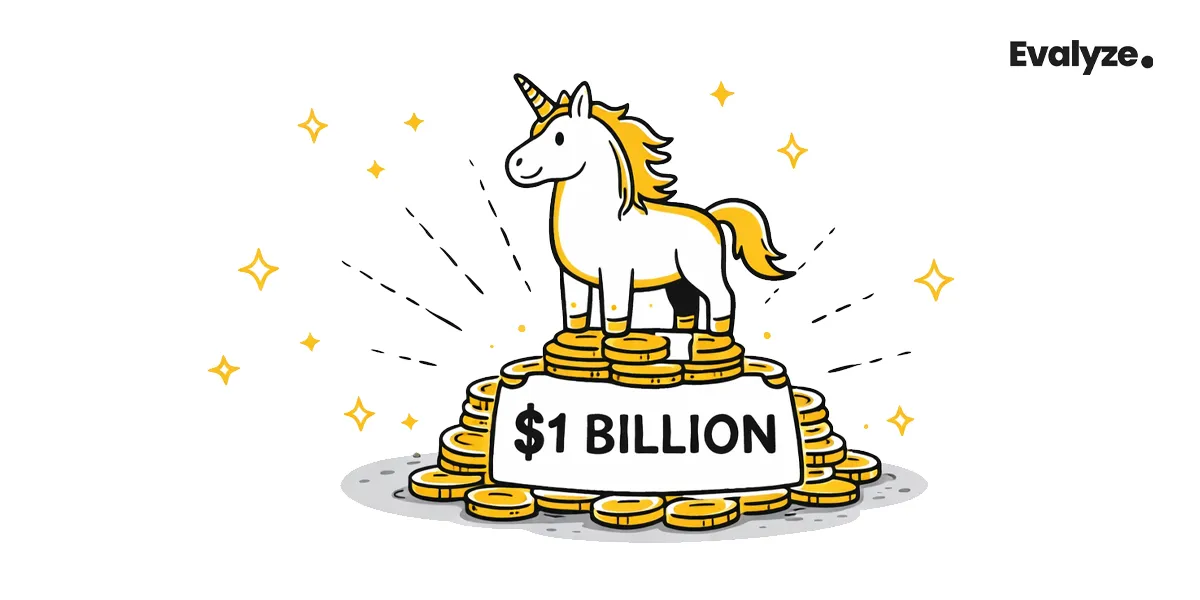
The $1 billion benchmark was chosen for a specific reason. It showed that a private company had enough traction, defensibility, and growth potential to earn the trust of major investors.
In 2013, fewer than 40 companies in the world had reached this level. Today, that number has changed significantly, which we will discuss next.
Explore more: Best Incubators for Tech Startups in the Seed Stage
A company becomes a unicorn based on its private market valuation. This is different from its public stock price, total revenue, or even its profitability. It is an important distinction to understand.
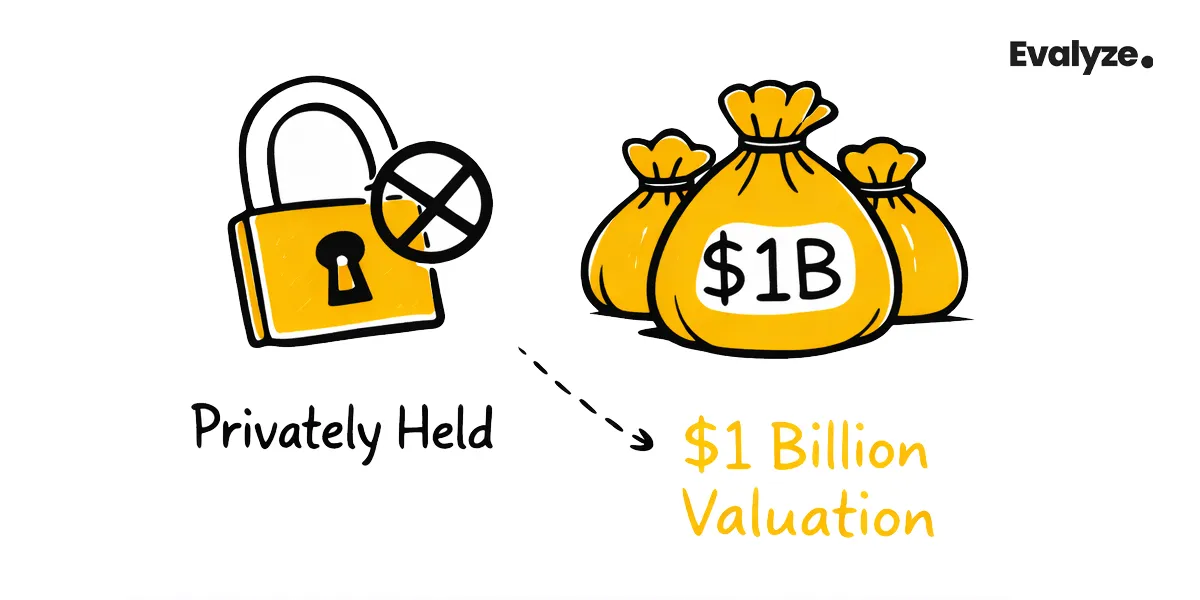
The main requirements for a company to qualify are simple:
Venture capital is essential to this process. Most startups would never reach a $1 billion value without VC-backed funding rounds, such as Seed, Series A, B, and C. These rounds are important for two reasons:
Quick Reference Table
| Term | Simple Definition |
|---|---|
| IPO | When a company first sells its shares to the public on the stock market. |
| Funding Round | A period where investors give a startup money in exchange for partial ownership. |
| Post-money Valuation | The estimated value of a company right after it receives a new investment. |
There is no single formula for success, but most unicorns follow a similar growth pattern. First, they identify a large market where customers' needs are not being met. Then, they build a scalable product, usually software or a digital platform, that can grow quickly without massive extra costs.
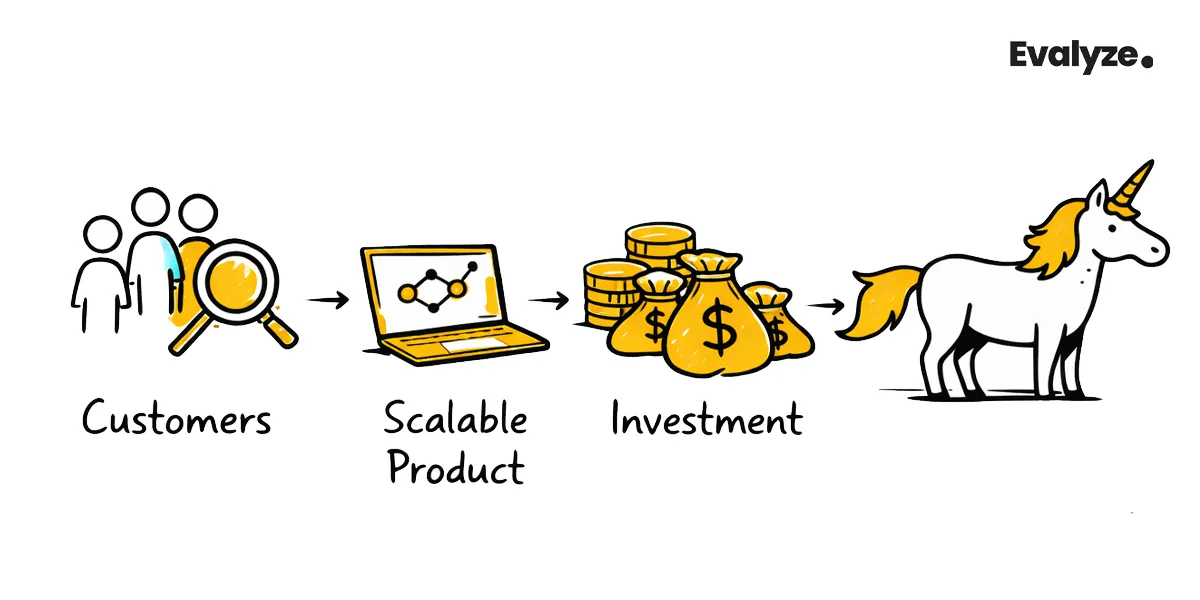
As the company gains more users or increases its revenue, it attracts successive rounds of investment. Each new round of funding gradually pushes the company's value higher until it crosses the $1 billion mark.
Market timing is a very important factor that people often overlook. Many of today’s unicorns started during times of major technological change.
For example:
By being early to a macro trend, these companies can grow much faster than usual, shortening the "timeline to scale."
Investor confidence helps a company grow even faster through a "snowball effect." When a famous or reputable VC firm leads a funding round at a high price, it sends a strong signal to the rest of the market.
This signals credibility, making it much easier for the startup to find the next group of investors. Because the company now looks like a "winner," the next funding round often happens at an even higher valuation.
Continue reading: How to Build an Investor Funnel
Valuation in private markets differs from that in public markets. For a private company, there is no daily stock price to look at. Instead, the value is negotiated between the startup and its investors during each funding round.
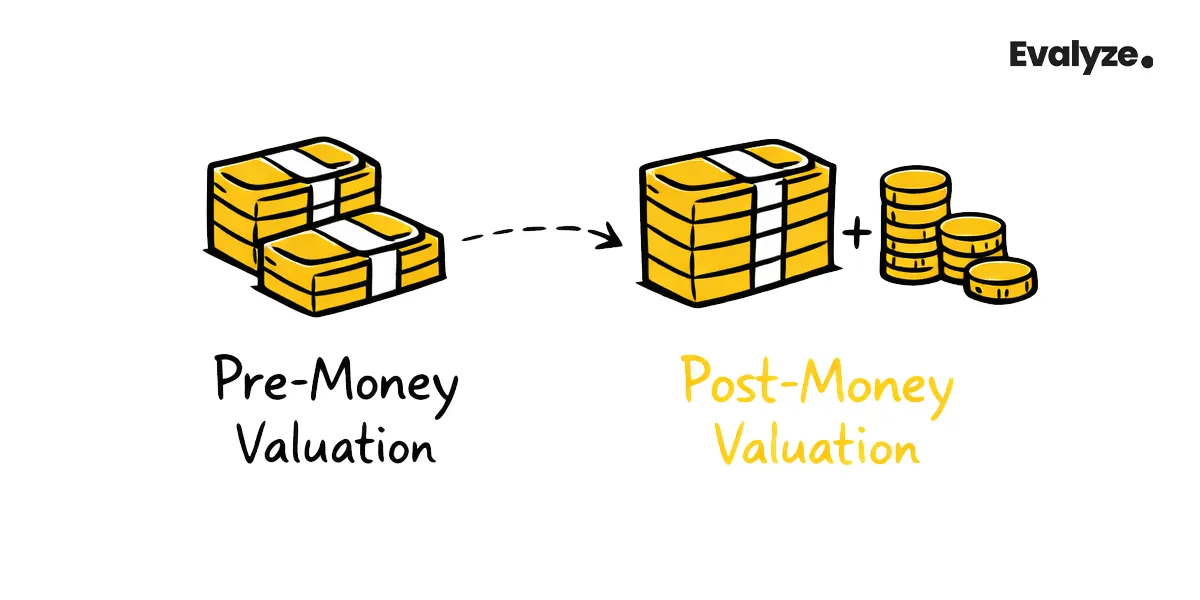
To understand how this works, you need to know two specific figures:
When people talk about a "unicorn valuation," they are almost always referring to the post-money figure.
Read this next: Best Startup Hubs & Ecosystems for Fundraising
It is critical to remember that a high valuation does not automatically mean a company is profitable. In some cases, it doesn't even reflect high revenue. A company can be valued at $2 billion while actually losing a lot of money every month.
Unicorn valuations are based on investor expectations about two things:
This distinction is very important. It helps you decide if a unicorn is truly a strong, valuable business or if it is structurally fragile and at risk of failing.
| Feature | Public Company (e.g., Apple) | Private Startup (Unicorn) |
|---|---|---|
| Price Source | Stock market (changes daily) | Negotiation (during funding rounds) |
| Transparency | High (financials are public) | Low (financials are private) |
| Main Driver | Current earnings and stability | Future growth and market capture |
Unicorn startups are not just found in Silicon Valley or the finance sector.
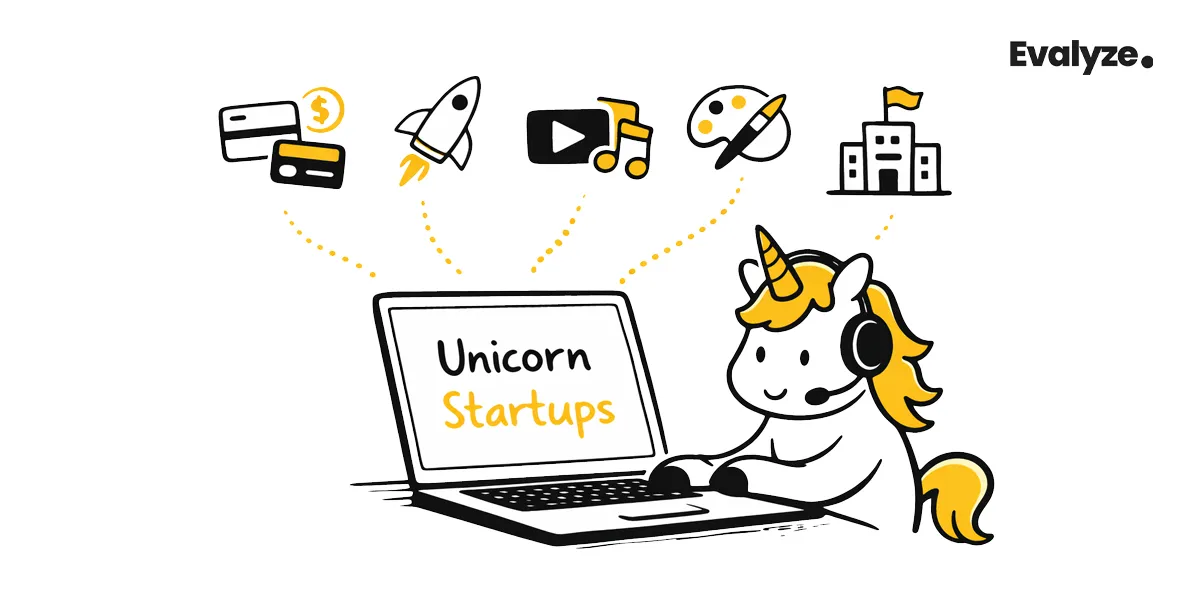
They exist across many different industries and locations around the world:
Save this for later: 8 Small Business Grants in the US
These examples show us three things about the modern business world:
As startup valuations grew larger, the vocabulary used to describe them also changed.
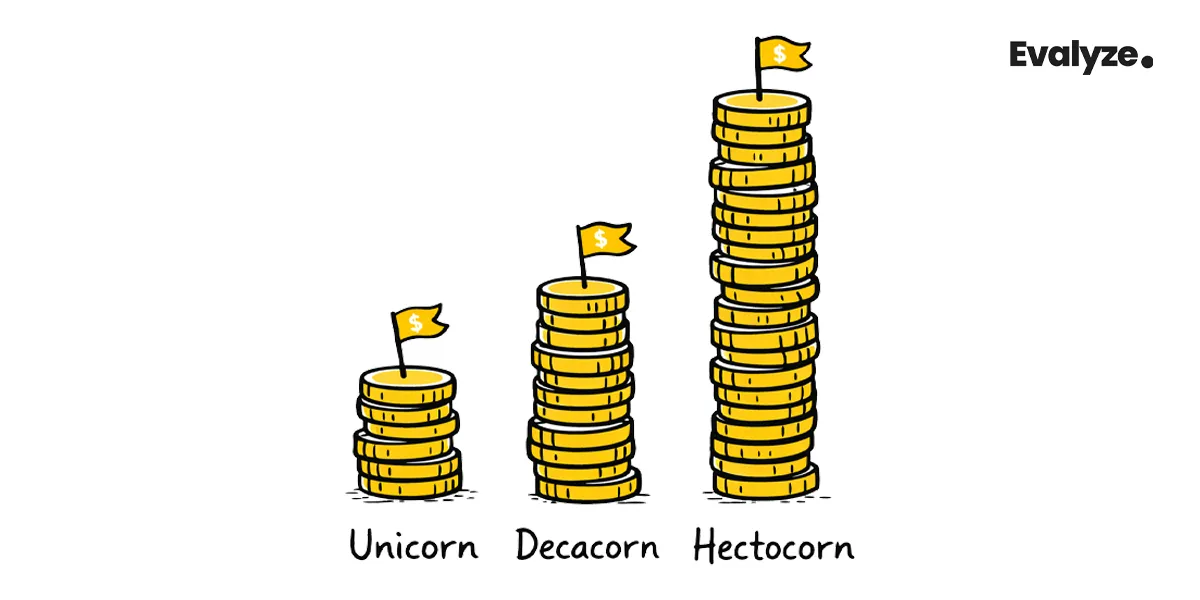
Not every billion-dollar company is the same, so new terms were created to show different levels of success:
There is also an informal term used in the industry: the soonicorn. This describes a startup that has not yet reached a $1 billion value but is on a credible trajectory to get there soon.
A soonicorn is often valued between $500 million and $999 million. Investors watch these companies closely because they show strong growth indicators, suggesting they will become the next generation of unicorns.
Too useful to skip: 15 Small Business Grants in Canada for Startups
| Term | Valuation | Rarity |
|---|---|---|
| Soonicorn | $500M – $999M | Common / Growing |
| Unicorn | $1 Billion+ | Rare |
| Decacorn | $10 Billion+ | Very Rare |
| Hectocorn | $100 Billion+ | Extremely Rare |
The short answer: they are much more common than they used to be, but they are harder to sustain. According to CB Insights data, the global unicorn count has grown from just a handful in 2013 to over 1,500 companies today. Because there are so many now, the term has lost some of its "mythical" or exclusive feeling.
However, the VC climate (the environment for venture capital) has changed. Since the "peak years" of 2021-2022, things have tightened up.
Factors like rising interest rates and a lower risk appetite among investors have made it harder to secure large checks. Additionally, there has been a slowdown in tech IPOs, making it harder for these companies to list on the stock market.
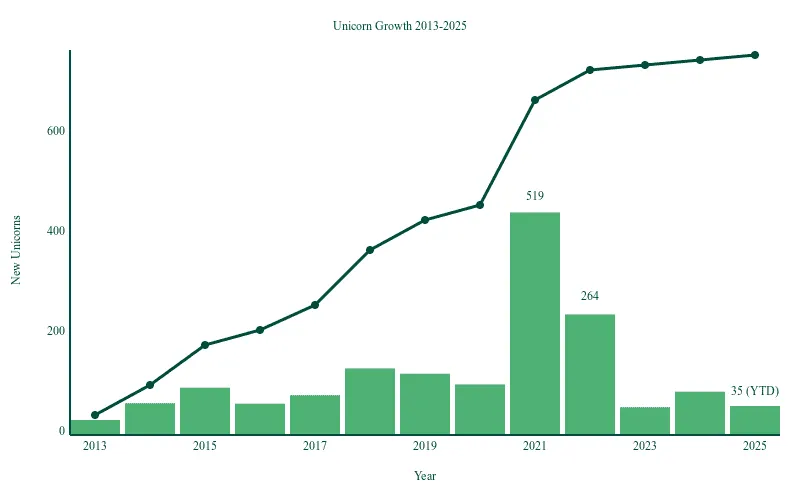
Because of these changes, many companies have faced valuation corrections. This means their estimated value dropped because they weren't growing fast enough to justify a high price. In some cases, unicorns had to raise money in down rounds, where their "paper valuation" was slashed (lowered) significantly.
The bottom line: It might be easier to reach the $1 billion mark than it was ten years ago, but staying one and eventually delivering returns to investors is now much more difficult.
Worth bookmarking: 12 Small Business Grants in Europe
Beyond the big numbers, unicorns have a real impact on the global economy. They are important for several reasons:
Founder’s favourite: AI-Powered Investor Outreach
An exit is a major event because it returns capital to investors. This means the people who took a risk early on finally get their money back, usually with a large profit.
When a unicorn exits successfully, it does more than just reward its shareholders. It validates the broader venture ecosystem, proving to the world that investing in startups is a winning strategy. This success "unlocks" additional capital, which is then used to fund subsequent rounds of early-stage funding for the next generation of startups.
A must-read for founders: How Venture Capitalists Really Think
The answer is no. It is easy to think they always win, but this is often due to survivorship bias. We usually only hear about the famous winners like Stripe, while the companies that fail are forgotten.
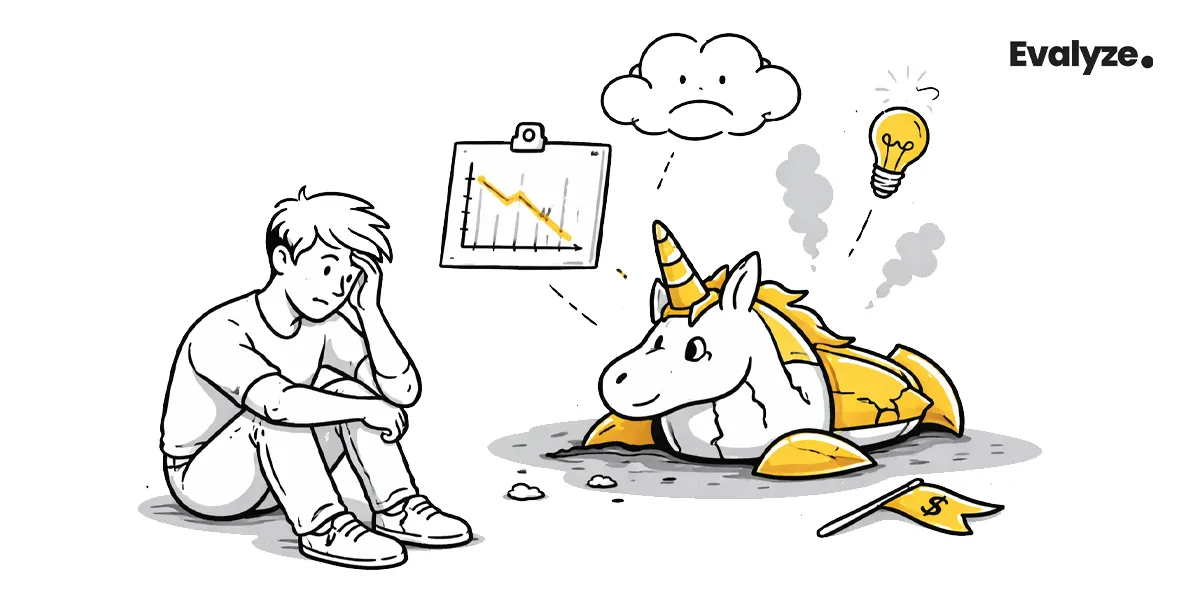
For every success story, there is a "cautionary tale" (a warning) about a startup that struggled. Down rounds, in which a company raises capital at a lower valuation than its previous round, are more common than many founders like to admit.
There have been several high-profile IPO disappointments. These are companies that were valued very highly as private startups, but when they listed publicly, their stock cratered (dropped quickly).
This has caused people to ask serious questions: Do private market valuations reflect reality, or are they just based on hype?
Don’t miss this: Why Your Pitch Deck Is not Working?
At its peak in 2019, WeWork was valued at $47 billion, but governance problems, an aborted IPO, and massive losses drove its valuation down and forced it into Chapter 11 restructuring in 2023. The unicorn label simply means a private valuation above 1 billion dollars at a given moment; it does not guarantee profitability, resilience, or survival, and a unicorn today can be drastically devalued or even out of business a few years later.
Don't let a weak deck kill a great idea.
Before you meet your next VC, use Evalyze.ai to optimize your pitch. Our AI-driven insights help you sharpen your strategy, fix narrative holes, and connect with the right investors for your stage. It’s time to take the mystery out of fundraising.
FAQ
A practical founder guide to choosing micro VCs vs traditional VC funds, check size, speed, follow-on support, and a simple decision worksheet.
December 16, 2025

Practical tips to make your online pitch clear, engaging, and investor-ready from any screen.
November 1, 2025