
How Long Does Fundraising Take?
Discover the typical timelines for raising startup funding and learn actionable strategies to accelerate your fundraising process.
June 9, 2025
A practical shortlist of incubators for tech startups in the seed stage, plus a quick fit checklist and what to prep to apply fast.
The gap between a prestigious incubator and one that actually delivers revenue is often wider than founders realize. At the seed stage, your primary goal is to trade a small amount of equity or time for a massive leap in credibility and distribution.
Below is a tactical shortlist of seed-stage tech incubators, categorized by their specific superpowers, whether that's deep-tech validation, enterprise sales access, or investor-ready narrative building.
Key Takeaway
While the industry uses these labels interchangeably, the program's name matters far less than its structural impact on your cap table and calendar.
At the seed stage, you are evaluating liquidity versus leverage.
When reviewing a program, ignore the marketing copy and filter for these four mechanics:
Don’t Miss: 20 AI Fundraising Tools for Startups
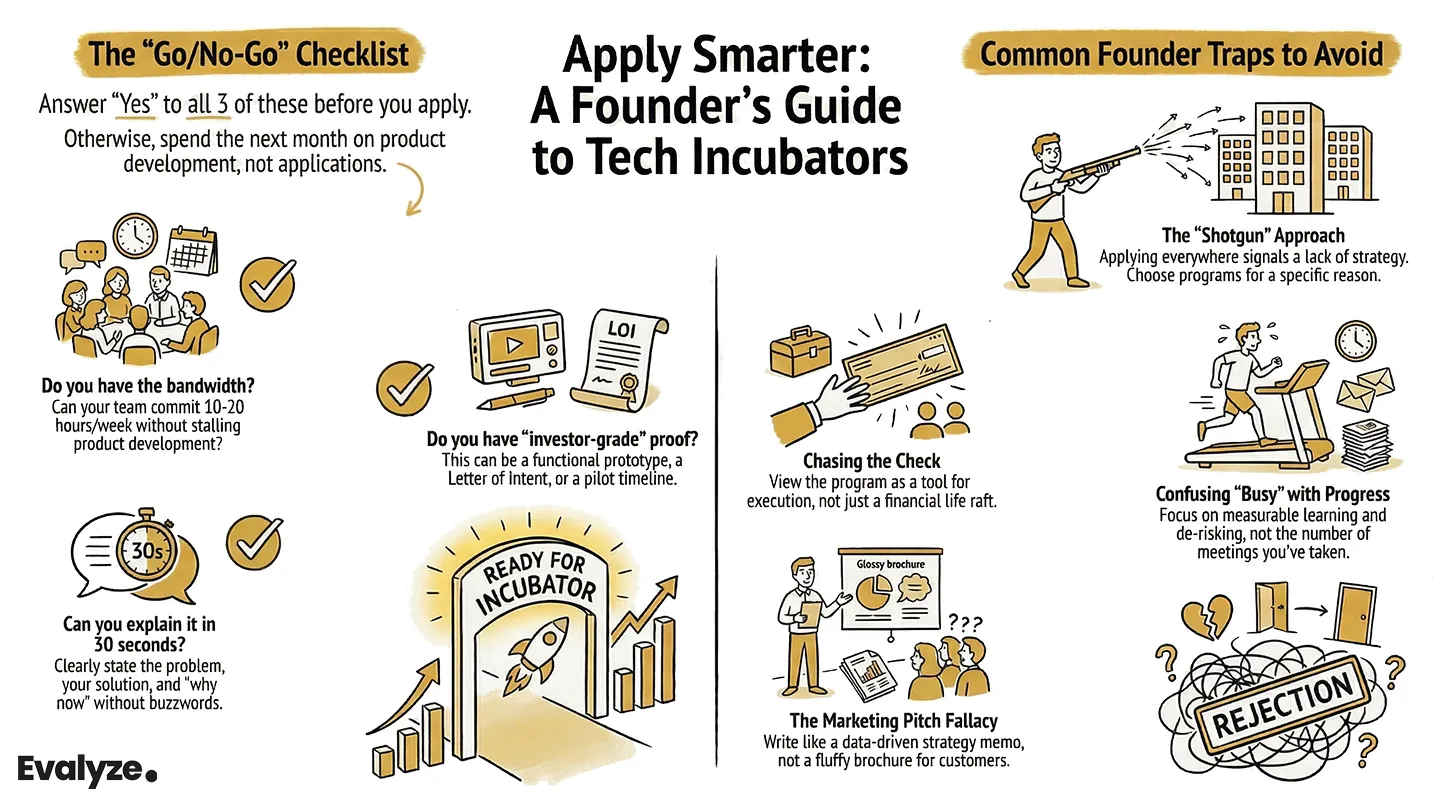
Before burning operational cycles on a 20-page application, audit your startup against these six criteria.
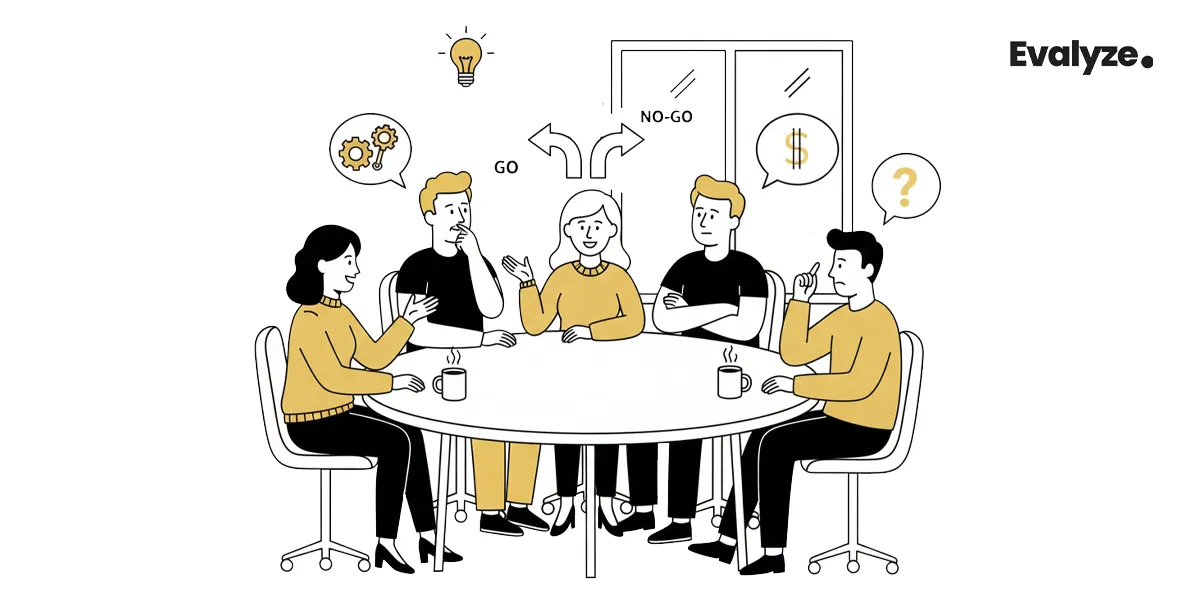
If you cannot confidently answer "Yes" to at least four, you are likely better off spending the next month on product development than on applications.
The Golden Rule:
Never optimize for acceptance. Optimize for outcomes. An acceptance letter from a program that doesn't solve your specific distribution or technical bottlenecks is just a high-cost distraction.
Next read: Best Startup Hubs & Ecosystems for Fundraising
Incubators for tech startups from Canada and other countries.
| Programme | Where | Best for | Stage fit | What to prep |
|---|---|---|---|---|
| DMZ (Toronto Metropolitan University) | Toronto, CA | Early-stage tech founders who want revenue + investor prep | Early-stage | Deck + traction summary + GTM plan |
| Creative Destruction Lab (CDL) | Multi-site (incl. CA) | Science/tech startups that can set challenging objectives with mentors | Seed-stage | Metrics, objective roadmap, strong founder/tech story |
| Velocity (University of Waterloo) | Waterloo, CA | Pre-seed tech startups turning ideas into scalable companies | Pre-seed tech | Problem clarity + prototype plan + milestones |
| District 3 (Concordia) | Montréal, CA | High-tech/health/biotech teams aiming for first funding readiness | Investor-ready for first round | Deck + evidence of PMF progress + gaps you need help closing |
| Launch Academy | Vancouver, CA | Founders who want mentorship + community + structured startup education | Early-stage | MVP narrative + customer learning + founder plan |
| NEXT AI (NEXT Canada) | Canada | Early-stage/pre-seed teams with prototype + early traction (or strong idea) | Early-stage/pre-seed | Prototype/traction proof + differentiation + roadmap |
| Y Combinator | US (SF) | Teams aiming for a classic seed launch + investor access | Seed funding + batches | Tight application + crisp metrics + “why now” |
| Techstars (Accelerators) | Global | Mentorship-driven cohorts; broad verticals and cities | Early-stage, 3-month | Clear problem/market + progress + why this programme |
| Berkeley SkyDeck (Incubator + Accelerator) | US (Berkeley) | UC-affiliated early-stage teams (Pad-13) + “ready to raise” cohort teams | Idea→“ready to raise” | UC affiliation (for incubator) + fundraising readiness (for accelerator) |
| MassChallenge | Multiple (US/UK, etc.) | Founders who want zero-equity, zero-cost acceleration | Equity-free model | Impact + execution plan + traction indicators |
| Alchemist Accelerator | US (SF Bay) | B2B/enterprise startups (you sell to businesses) | Early-stage enterprise | Enterprise wedge + pipeline logic + why you win |
| Entrepreneur First (EF) | UK + global hubs | Individuals/teams as early as “no startup yet” | Pre-seed formation | Founder story + problem obsession + ability to build fast |
Explore more: Micro VCs vs. Traditional VCs: Which Is Right for Early-Stage Founders?
Here's the truth: reviewers are scanning for signal density.

A clean application package usually includes:
Key point: If your deck reads like “features + market size,” you'll look early even if you're not.
Try Evalyze for Free before you apply:
Run pitch analysis to spot weak signals, tighten your narrative, and use AI investor matching to target the right cheque sizes, then reuse that clarity in every incubator application.
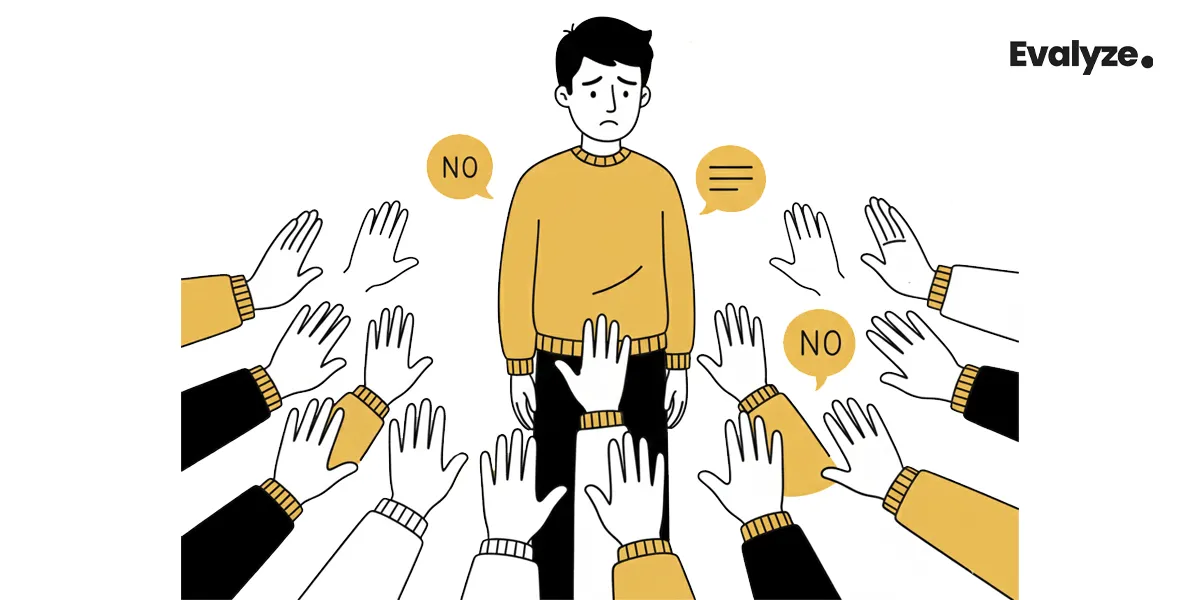
Even with a great product, specific tactical errors can signal a lack of maturity or focus to selection committees. Avoid these 4 common founder traps:
1. Applying To Any Incubator:
Applying to dozens of programs without a clear thesis signals a lack of strategic direction. Top-tier programs look for founders who have chosen them for a specific reason, not those looking for any open door.
2. Treating Support as a Financial Life-Raft:
If your primary reason for applying is the stipend or the initial check, it shows. Reviewers prioritize founders who view the program as a forcing function for execution, using the resources to hit specific milestones that would otherwise be out of reach.
3. Activity vs. Velocity:
Many founders confuse "being busy" (networking, attending events) with progress. A weak application focuses on the number of meetings held; a strong one focuses on measurable learning loops and technical de-risking.
4. The "Marketing Pitch" Fallacy:
Incubator reviewers are not your customers; they are your partners (and often your first "investors"). Avoid fluff-filled marketing copy. Instead, write your application like a decision memo: data-driven, objective, and transparent about the risks you are working to solve.
The Professional Standard:
A high-quality application reads like an internal strategy document. It should demonstrate that you understand your business's weaknesses as clearly as its strengths.
Before you go: Why Early-Stage VCs Say No to 99% of Startups
A founder’s best incubator list isn’t long; it’s selective. Pick programmes that match your stage and force real execution, not just networking.
Try Evalyze for Free to strengthen your pitch deck, spot weak signals early, and match with investors aligned to your stage, then apply to the right programmes with a cleaner, faster story.
FAQ
Discover the typical timelines for raising startup funding and learn actionable strategies to accelerate your fundraising process.
June 9, 2025

Your go-to toolkit for founder-friendly tools that help you pitch better, connect with investors faster, and raise smarter, without burning time or budget.
June 8, 2025