

5 Questions to Ask Before Saying Yes to an Investor
The right investor can fuel your vision or derail it; here’s how to tell the difference before you say yes.
October 5, 2025
A practical founder guide to choosing micro VCs vs traditional VC funds, check size, speed, follow-on support, and a simple decision worksheet.
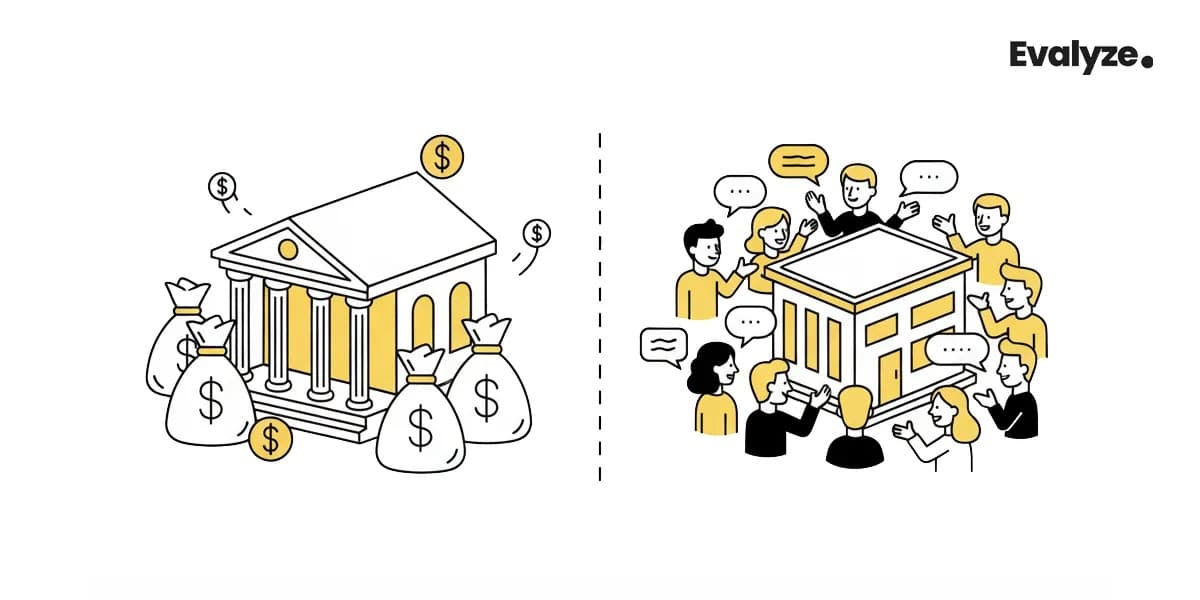
Founders usually ask this question when something feels off in fundraising: you're getting meetings, but not momentum. Or you're getting interest, but the round math doesn't work. Or you're talking to "VCs" who sound like they're investing in a different universe.
So let's make this concrete and founder-usable: the goal isn't to label investors correctly. The goal is to choose the kind of investor who helps you get the next proof point (traction, product, distribution, regulatory clearance, etc.) without turning your cap table into modern art.
Key Takeaways
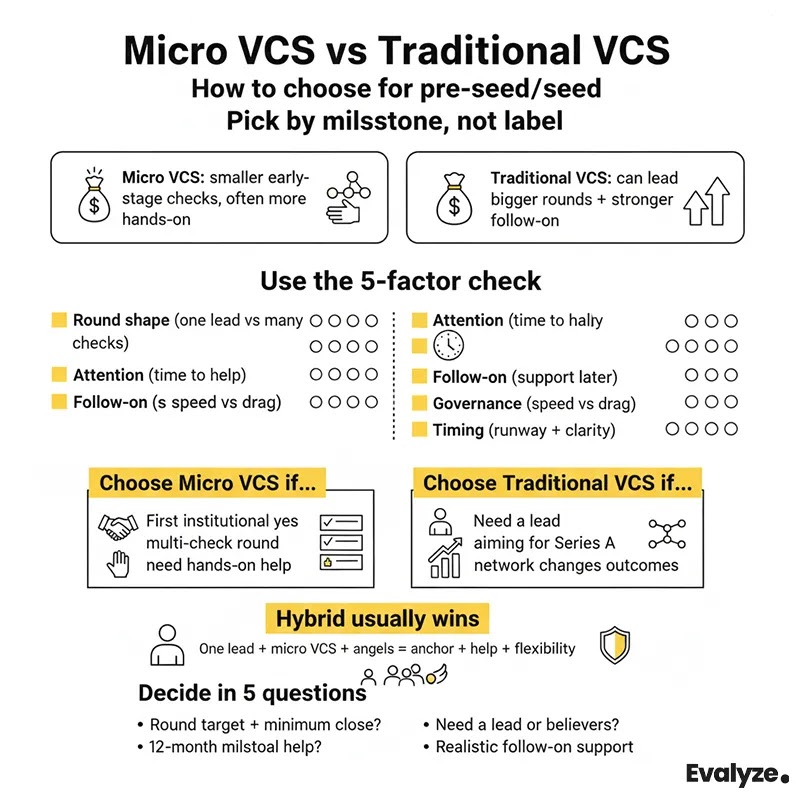
Micro VCs are generally described as early-stage investors who write smaller seed checks, often in the $25K to $500K range, and commonly run smaller funds (often under ~$50M).
Traditional VC funds (in founder-speak) usually refer to larger firms that can lead larger rounds, do deeper follow-ons, and often participate from seed through later stages. Venture rounds are commonly discussed as a progression from:
pre-seed → seed → Series A → Series B → Series C+
where each step implies a different maturity level and risk profile.
You might also like: How Venture Capitalists Really Think
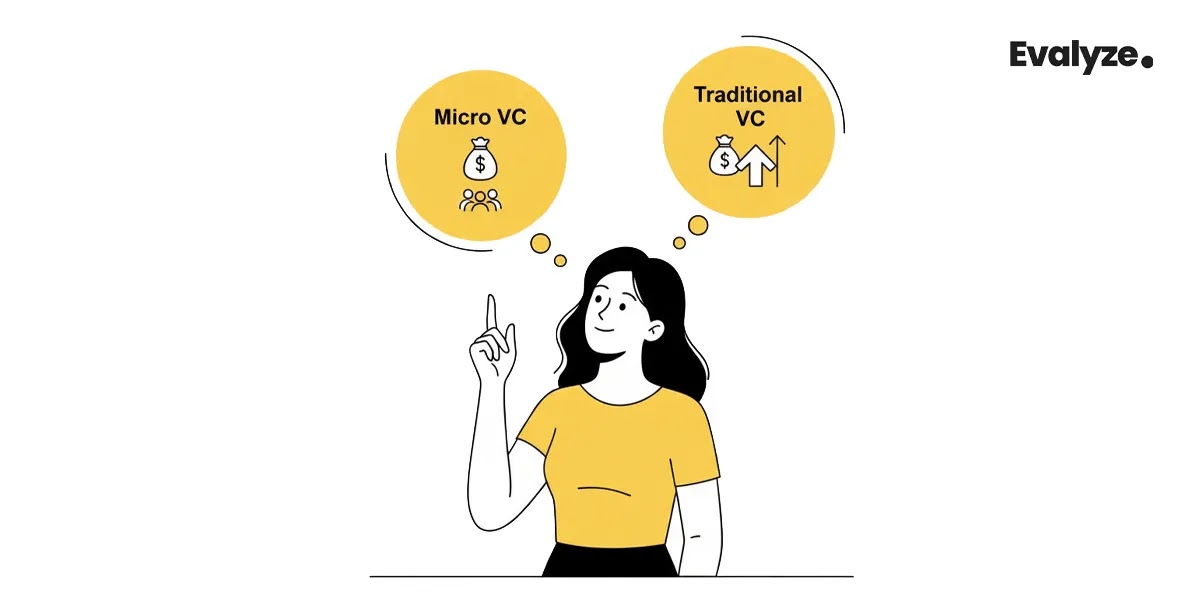
A micro VC may be perfect if your round can be built from multiple smaller checks and you don't require one "big lead" to set terms and pull the rest of the round together.
A traditional VC (or larger seed fund) becomes more relevant when:
Founder reality: if your target is "$2-3M seed, close in 6-8 weeks," the kind of lead matters as much as the lead itself.
Early rounds are where you're most likely to need hands-on help: framing the wedge, fixing the go-to-market story, turning "cool tech" into "obvious buyer value," and sharpening the milestones.
Micro VCs often win here because their model and brand are built around being close to early-stage execution. Traditional funds can be incredibly helpful too, but you need to sanity-check partner bandwidth (some firms are built for later-stage scaling, not pre-product chaos).
A simple test: ask what they did for the last 2 seed-stage companies they backed. If the answer is vague, the "platform support" you're imagining might be imaginary.
This is the most misunderstood part.
Even a supportive investor can become a problem if they can't follow on when you need it because:
This doesn't mean "avoid micro VCs." It means: know what kind of support is realistic and design your investor mix accordingly (micro VC + angels + maybe a larger seed lead, depending on your round).
Many VC firms expect some say in decision-making and may ask for governance rights, sometimes including a board seat, especially as you move into institutional rounds.
At seed, this can be healthy (experienced guidance) or heavy (decision drag). What you want is not "hands off" or "hands on." You want fast decisions and clear ownership.
If you've felt that rounds take longer than the stories you heard in 2021, you're not imagining things. In a major 2024 market recap, the time between rounds hit decade highs, with later rounds often stretching past two years, a proxy for stricter capital availability and "prove more with less" expectations.
Why this matters to your micro vs. traditional decision:
Founder's favorite: How to Find Angel Investors for Your Startup
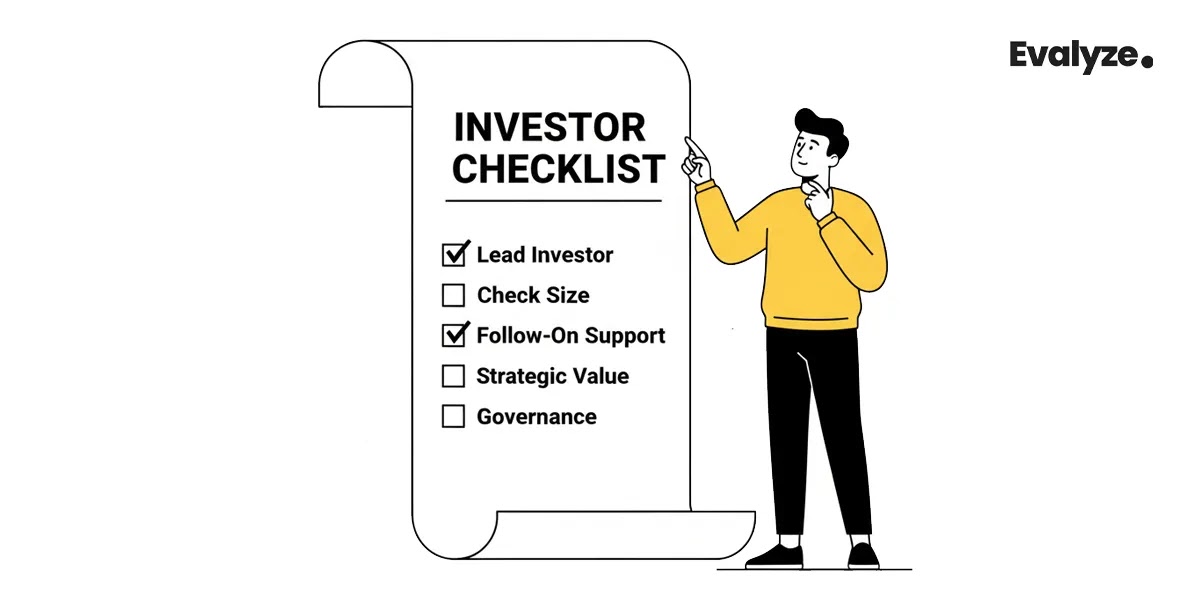
Most founders end up here. A common "clean" structure is:
Keep learning: What Are Investors Looking For in Pitch Decks?

Answer these in writing:
Before you go: 5 Questions to Ask Before Saying Yes to an Investor
Two moments in this decision are painfully easy to mess up:
1) You pitch too early with the wrong deck.
Evalyze's pitch deck analysis is designed to show what's unclear or missing from an investor's perspective, so you fix the "why now," traction logic, or business model fuzziness before you burn warm intros.
2) You talk to the wrong investors for your stage.
Evalyze investor matching is built around matching investors to your startup's stage, industry, and goals, so "micro VC vs traditional VC" becomes a practical list of people who actually invest in your kind of company.
Choosing between micro VCs vs traditional VC funds isn't a personality test. It's a round design. Start with your next 12-month milestone, then pick the investor type that can realistically lead (or support) the round size you need and still be helpful when things get messy. If you want the fastest clarity, tighten your pitch deck and build an investor shortlist that matches your stage and category; use Evalyze to save you weeks of wrong meetings.
FAQ
The right investor can fuel your vision or derail it; here’s how to tell the difference before you say yes.
October 5, 2025

Practical ways to raise $5K–$25K for your startup without taking a loan.
September 4, 2025