

How to Use AI for Fundraising in 2026: A Founder’s Guide
Use AI for fundraising the right way in 2026. Score your pitch deck, match with the right investors, and skip 40 hours of cold research. Free tool inside.
April 30, 2026
A no-fluff breakdown of how venture capital really works—and what founders must know to win it

Venture capital looks like a fast track to funding, but it comes with high expectations. VCs aren’t looking for solid businesses—they’re looking for outliers that can return 10x or more.
Most founders don’t realize this. They pitch a good product or steady growth, but that’s not enough. To raise VC money, you need to understand how VCs think—and that starts with the math.
This guide explains how VC funds work, where the money goes, and why VCs chase unicorns. It’s not just about pitching well—it’s about knowing what they actually need to win.
🔑 Key Takeaways
Limited Partners (LPs) and General Partners (GPs) are the leading players.
Imagine you're launching a startup and need substantial capital. The funds you seek often originate from LPs. These are typically:
LPs allocate their capital across various assets—stocks, bonds, real estate, and venture capital. Venture capital is high-risk but offers the potential for significant returns. Typically, LPs might dedicate about 2-5% of their investment portfolio to VC funds.
GPs are the individuals or entities responsible for managing the VC fund's operations and investment decisions. Their roles include:
GPs receive a management fee, typically around 2% of the fund's committed capital, to cover operational costs. Additionally, they earn a percentage of the fund's profits, known as "carried interest," usually about 20%, aligning their interests with those of the LPs.
💡Free Resource: How To Find Investor For Your Startup
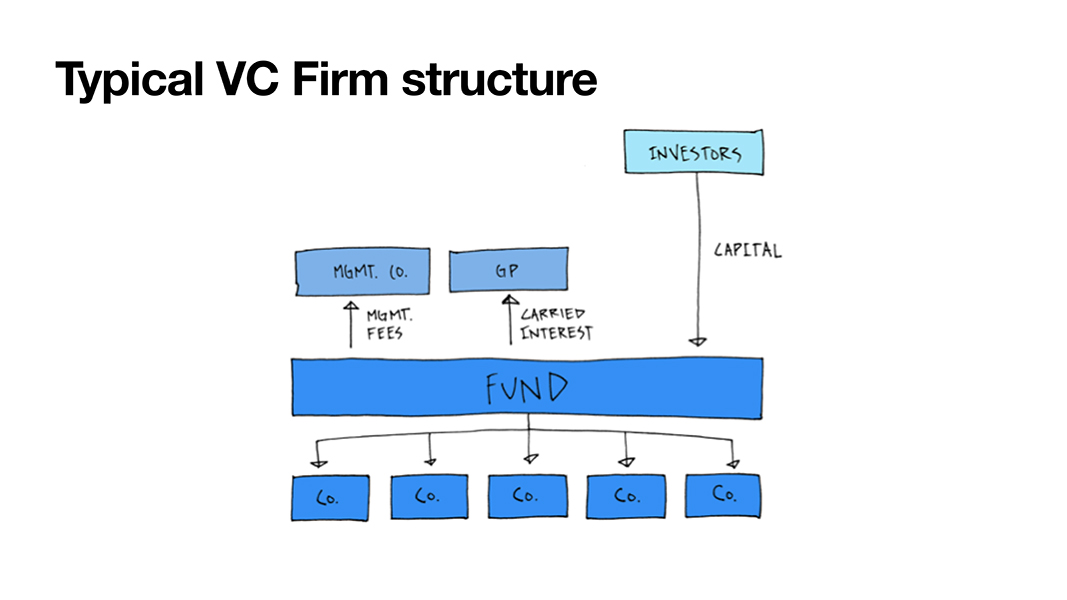
When a VC firm raises a $100 million fund, they don’t actually invest all of it in startups.
Here’s what happens:
But the big money for VC managers (called GPs) doesn’t come from salaries. It comes from "carry" — their share of the profits. But they don’t earn this unless they beat a high bar.
What’s that bar?
The investors (called LPs) expect around 12% annual returns. Unless the VC fund grows their money at that pace or better, the GPs earn nothing extra.
In short:
💡Free Resource: Essential VC Resources from Pre-Seed to Seed Stage
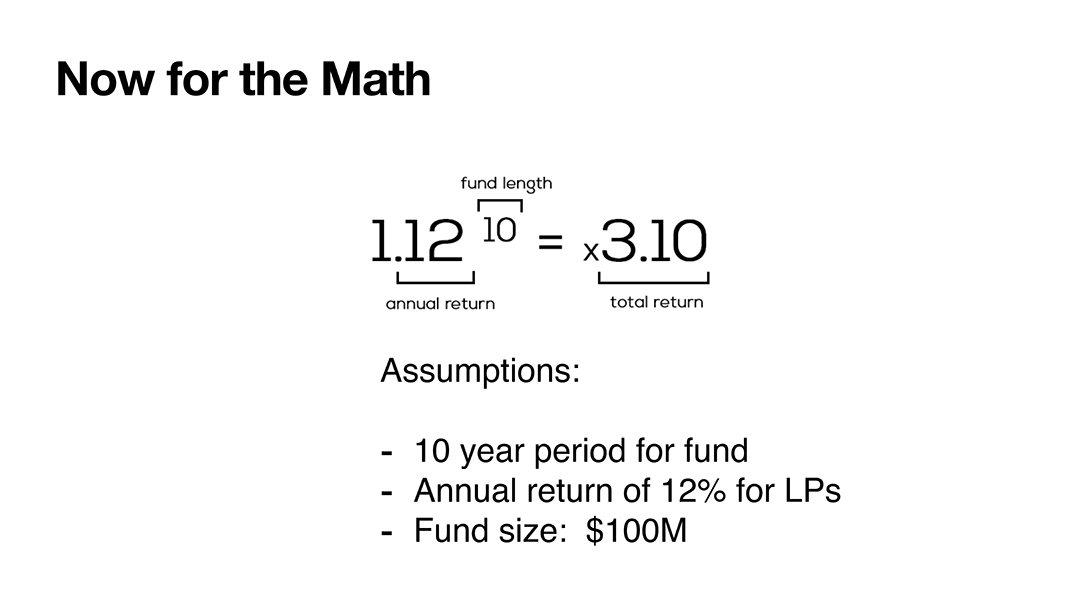
If a VC firm raises a $100 million fund, its investors (LPs) expect to get back around $310 million after 10 years. Why so much? Because they want around 12% annual returns, and that compoundes over time.
Here’s how the math plays out:
So, for each investment to help hit the target, it needs to exit big—and a few need to exit really big. Small wins or break-even outcomes won’t get the fund to $310 million.
💡Free Resource: 9 Winning Startup Pitch Decks and Why They Secured Funding
Let’s say a VC firm makes 10 equal investments and ends up owning 25% of each company at exit. To meet investor expectations, they need to return $310 million.
Here’s what different outcomes look like:
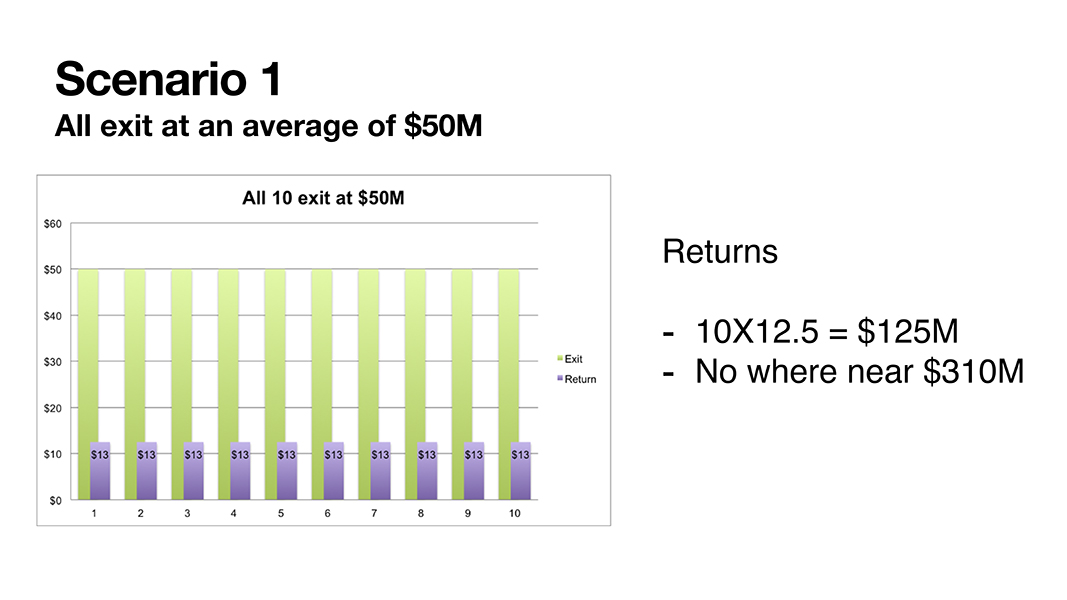
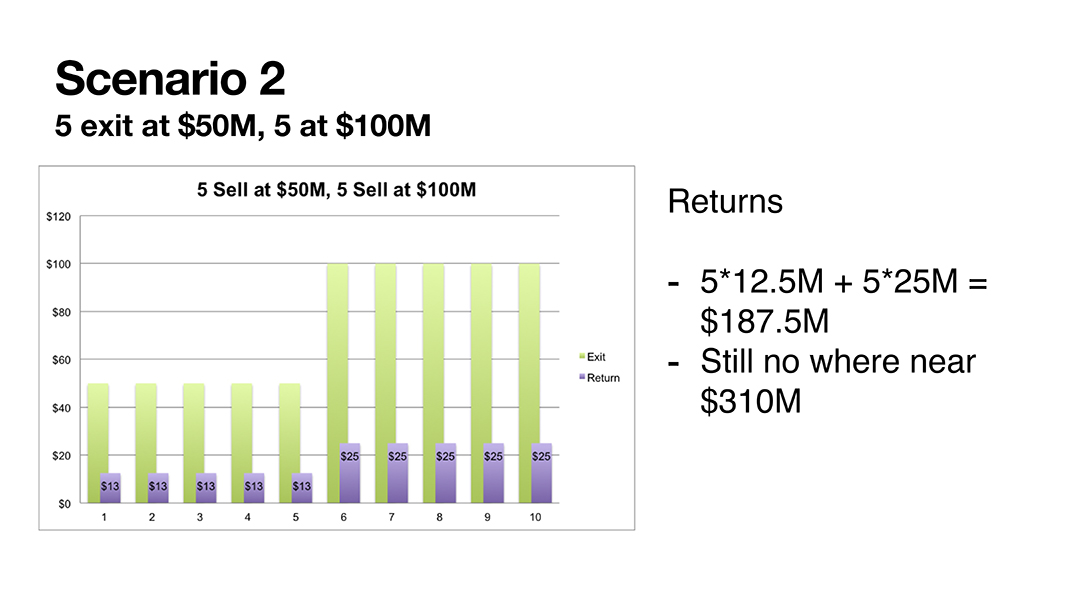
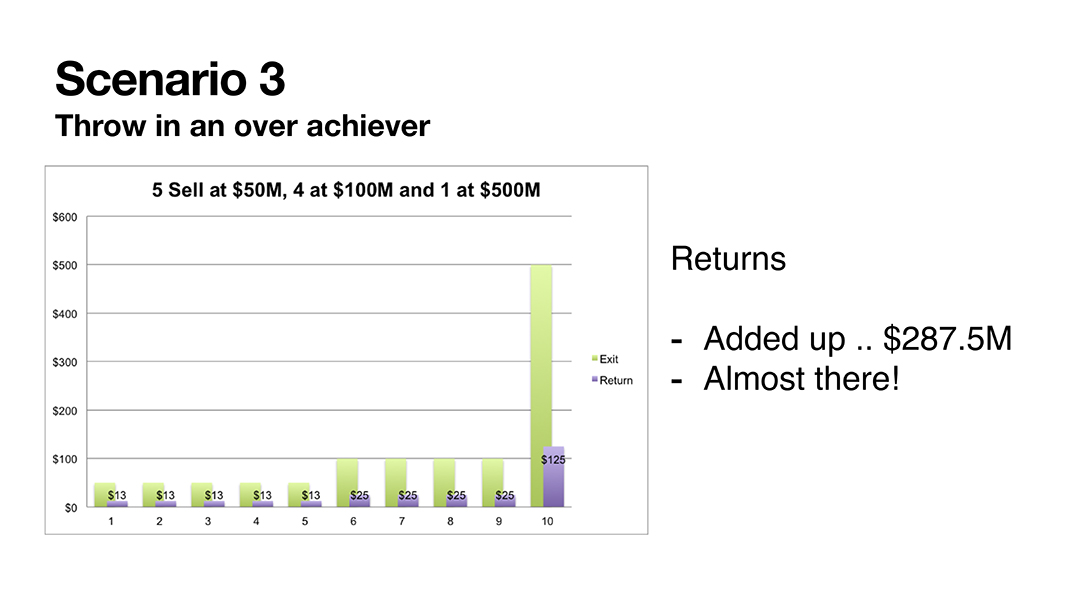
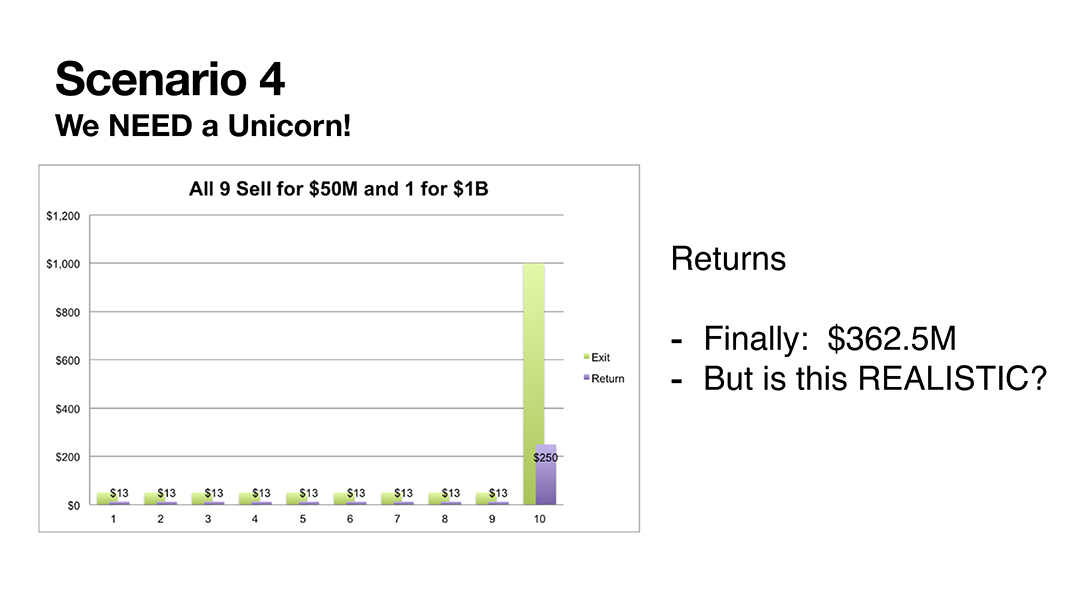
A VC fund usually needs at least one massive win to make the numbers work. That’s why VCs pass on “good” startups—they’re chasing the few that can deliver outsized, fund-returning exits.
Here’s a more realistic outcome for a VC fund:
The total return? Around $318 million.
That just barely clears the target of $310 million needed to satisfy investors.
This is the truth most founders never hear: Even with one big win, most funds only just make it. And very few funds repeat this success over and over.
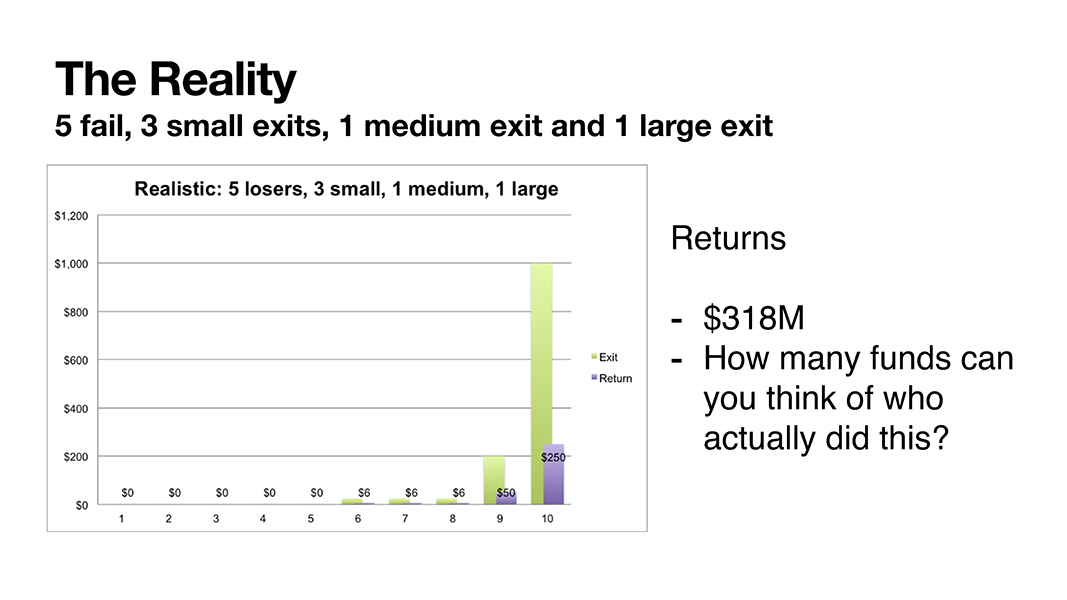
This is why VCs are extremely selective and often pass on anything that doesn’t have huge upside potential. They're not being difficult—they're doing the math.
Before writing a check, VCs ask one big question: What could go wrong? They look at four key risks:
To feel confident, VCs look for 5 critical things, often called the 5 Ts:
If a startup checks these boxes, it stands a much better chance of getting VC funding. It's not just about having a good idea—it’s about showing you’ve thought through the risks and have what it takes to win.
💡Must Read: What Are Investors Looking For in Pitch Decks?
If you're a founder raising VC money, you need to know the numbers behind it. VCs aren’t just betting on good companies—they’re betting on companies that can return the entire fund.
That means:
When you understand this math, your fundraising strategy changes. You start thinking like an investor:
Can this company be big enough to matter?
If the answer is yes, you’re not just building a company—you’re building a magnet for serious investment.
Evalyze.ai helps startups meet VC standards by improving their pitch decks through AI-powered analysis. It provides an Investor Readiness Score along with specific feedback on key areas like market size, business model, and team strength.
By comparing your deck to 8,000+ successful startups, Evalyze.ai shows where you stand—and how to fix it with storytelling. It’s a smart tool to boost your chances of raising capital in a competitive VC landscape.
Start Your Free Analysis Now →
📌 Reference
This blog post is based on insights shared in a LinkedIn post by Rubén Domínguez Ibar and the accompanying resource titled VC Math by Guhesh Ramanathan and Manas Tiwari.
Use AI for fundraising the right way in 2026. Score your pitch deck, match with the right investors, and skip 40 hours of cold research. Free tool inside.
April 30, 2026

Evaluating a company's pitch deck is a critical part of assessing its potential for raising capital and long-term success. This blog post of Evalyze.ai will showcase 15 standout companies whose pitch decks helped secure millions of dollars in funding, fueling their growth and market impact. From innovative tech platforms to sustainable brands, each of these companies used a compelling pitch to connect with investors. We also provide downloadable links to their pitch decks, giving you a behind-the-scenes look at what it takes to create a winning presentation for potential backers.
December 23, 2024