If you're building a startup in Europe, you've probably heard rumours like "there's so much free EU money" and then discovered… not quite.
The truth sits in the middle:
There are programmes (cash grants, tax credits, vouchers).
Most of them are competitive, bureaucratic, and tied to specific projects, not "free money to start anything".
The best results go to founders who know where to look and how to match their project to the right scheme.
This guide gives you a founder-readable map of EU-level grants, plus Germany, France, the Netherlands, and Ireland, and how to use them without turning grant-hunting into a full-time job.
How European Grants Actually Work
Before we dive into names and acronyms, a quick map:
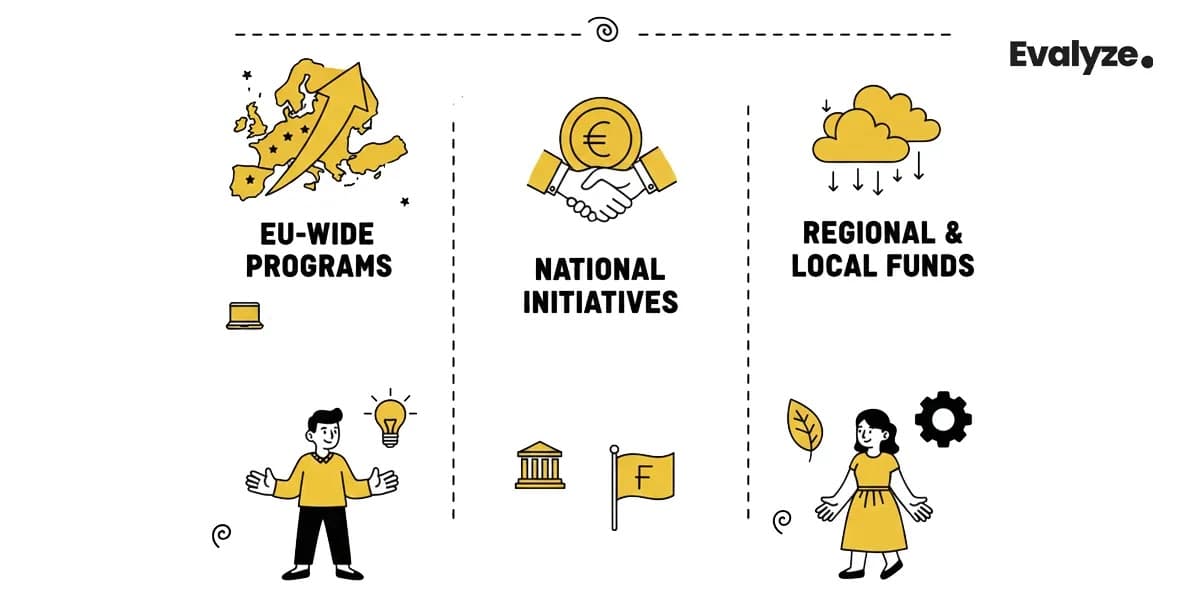
EU-level:
Programmes like EIC Accelerator, Eurostars, and the EUIPO SME Fund run from Brussels and usually support innovation, deeptech, or IP protection across member states.
National:
Each country has its own toolbox:
Germany: EXIST, regional innovation grants.
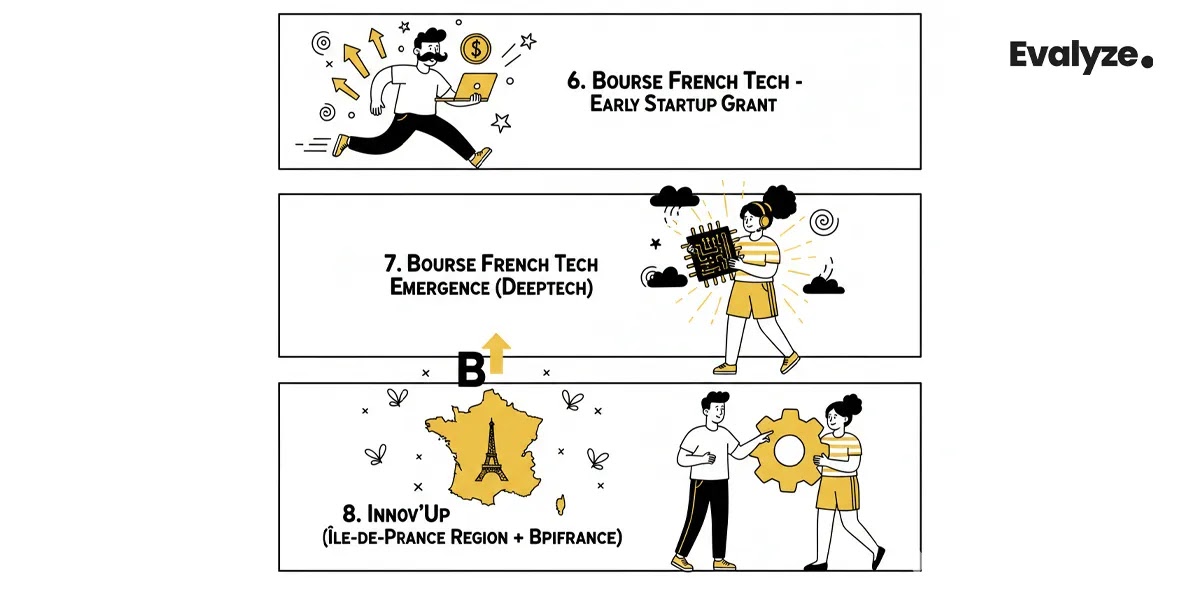
France: Bourse French Tech, deeptech grants, Innov'Up.
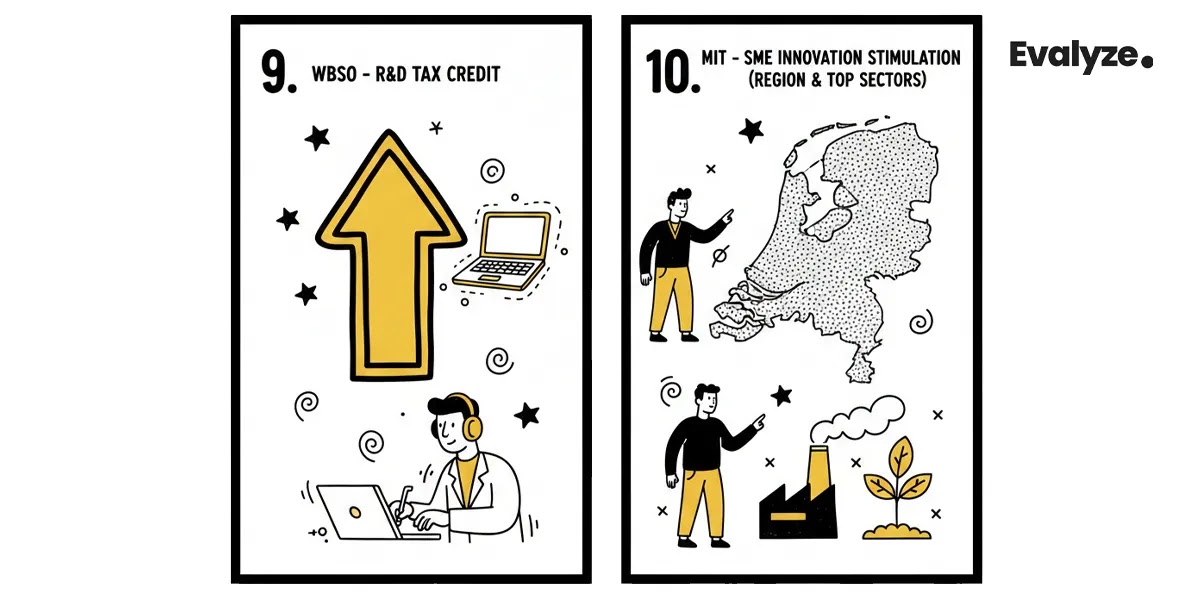
Netherlands: WBSO (R&D tax relief), MIT innovation schemes.
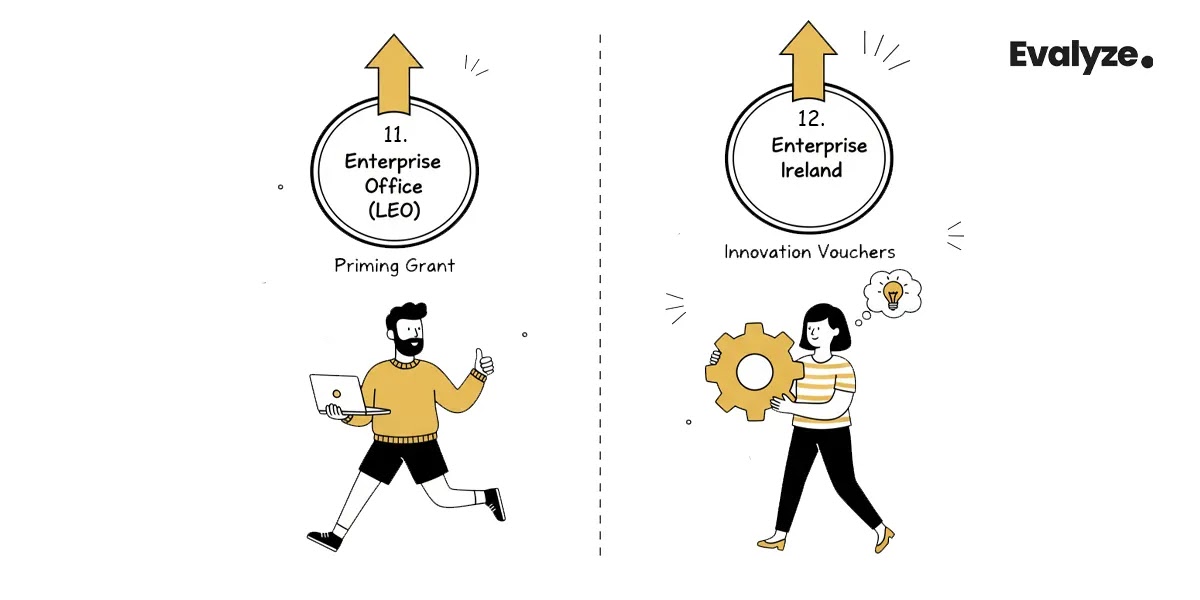
Ireland: Local Enterprise Office grants, Enterprise Ireland vouchers.
Regional/local:
Regions, cities, and development agencies add their own schemes on top of national ones.
Good for: Deeptech / highly innovative startups that already have a prototype and want to scale something genuinely new.
Who it's for
SMEs and startups in the EU or associated countries, typically with technologies around TRL 5-8 (you've moved beyond a slide deck; you have a prototype and early validation).
What it pays
Grant funding up to about €2.5M for innovation activities.
Optional equity investment via the EIC Fund, often up to ~€15M or more, as "blended finance".
Status
Ongoing flagship instrument under Horizon Europe with a standing application portal and periodic cut-off dates. Evaluation is multi-stage and very competitive.
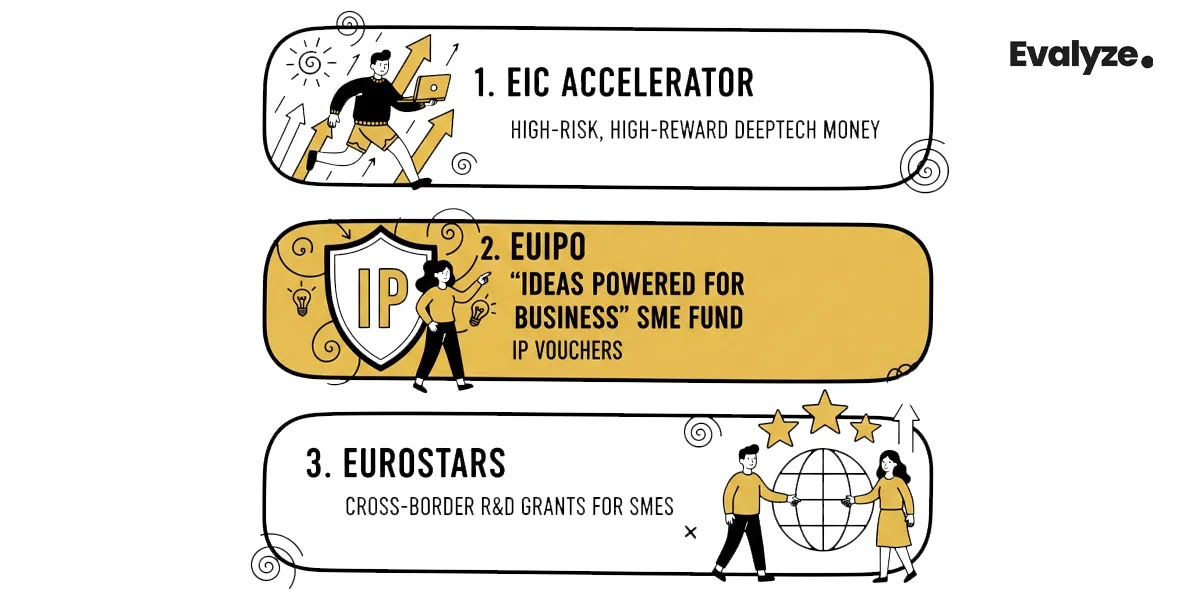
2. EUIPO "Ideas Powered for Business" SME Fund - IP Vouchers
Good for: Any EU startup that needs to register trademarks, designs, patents, or do an IP strategy scan, and wants to save a chunk of the fees.
Who it's for
SMEs in the EU (and currently also Ukrainian SMEs) applying for IP protection.
What it pays (typical current structure)
IP scan: up to 90% reimbursement, with national caps (often around €1,350).
Trademarks & designs: 75% reimbursement of basic fees at the EU, national, and regional level (up to €700 per SME in many countries).
Patents: up to 75% of certain patent fees and 50% of some legal costs, usually capped at around €1,000-€1,500 per voucher.
Plant varieties: up to 75% of online application and examination fees.
Status
Recurring EU programme with annual calls and limited budgets, awarded on a first-come, first-served basis. The exact voucher structure and caps are updated periodically, so always use the current SME Fund page on the EUIPO site as your source of truth.
3. Eurostars - Cross-Border R&D Grants for SMEs
Good for: Startups doing applied R&D with a partner (or partners) in another participating country.
Who it's for
R&D-performing SMEs in Eurostars-participating countries, working in international consortia (usually 2+ organisations from at least 2 countries).
What it pays
Funding comes from national agencies, not a single EU pot. Typical patterns:
Each country funds its own SMEs (often 40-60% of eligible R&D costs).
Individual SME grants typically fall in the low six-figure range.
Key conditions
The SME leads the project.
Clear innovation and commercialisation plan.
Projects usually run 2-3 years.
Status
Eurostars runs regular calls under the European Partnership on Innovative SMEs. Rules and funding rates differ by country, so always check your national funding agency's Eurostars page.
Germany: Grants for Innovative and Academic Spin-Offs
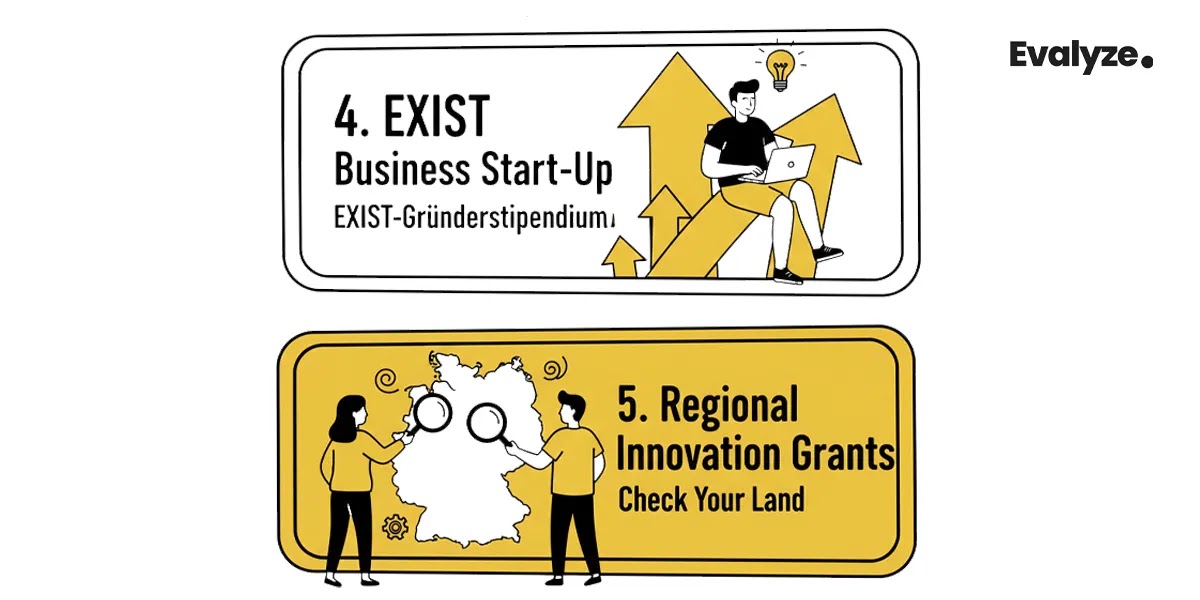
4. EXIST Business Start-Up Grant (EXIST-Gründerstipendium)
Good for: Students, researchers, and recent graduates in Germany spinning out a tech / knowledge-based startup from a university.
Who it's for
Students, graduates, and researchers at German universities and research institutions.
Innovative, technology or knowledge-based projects with startup potential.
What it pays (per person, typical structure)
Monthly stipend (approximate ranges):
Students: around €1,000 / month
Graduates: around €2,500 / month
Doctoral founders: around €3,000 / month
Child allowance per month.
Material costs up to €10,000 per person, max €30,000 per team.
Coaching budget of about €5,000 per team.
Funding usually lasts up to 12 months.
Key conditions
You apply through your university, which must support the project.
The year is for building a business plan, prototype, and early validation, not for freelancing.
Status
Long-running federal programme; calls are recurring. The exact stipend rates and caps may change, so always confirm amounts on the official EXIST page before you submit.
5. Regional Innovation Grants - Check Your Land
On top of EXIST, each German Bundesland has its own innovation and startup instruments. Examples include:
Distr@l (Hesse) supports digital innovation projects at SMEs and startups.
Other regional schemes (Brandenburg, NRW, Bavaria, etc.) that co-fund R&D, digitalisation, or climate-relevant projects.
Patterns to expect:
Six-figure project budgets with 40-60% public co-funding.
Often requires a GmbH in that region and some matching funds.
Because these change frequently, treat them as "search targets":
[your Land] + "Innovationsförderung Start-up" + site:.de
Then look for the official websites of the state development bank or innovation agency.
Good for: Very early French startups that need a first serious push for feasibility work.
Who it's for
Young, innovative companies in France typically less than a few years old.
Often pre-revenue or early-revenue, with strong growth potential.
What it pays
Depending on the current version and region, the Bourse French Tech typically offers equity-free grants in the ~€10,000-€30,000 range, sometimes higher for reinforced versions.
Key conditions
Clear innovation and feasibility project (market study, prototype, validation).
"French Tech" criteria not a cafe or local service with no scale.
Status
Operated via Bpifrance as a standard instrument in the French startup toolbox. Exact caps, co-funding rates, and eligibility are updated under national plans like France 2030, so always read the latest Bpifrance fiche before applying.
7. Bourse French Tech Emergence (Deeptech)
Good for: Very early deeptech projects with a strong scientific base and lab connection.
Who it's for
Deeptech startups (or pre-startup projects) in France with heavy R&D and IP content.
Often linked to public research labs or universities.
What it pays
Equity-free support up to ~€90,000 to cover early R&D, proof-of-concept work, and business validation.
Status
A cornerstone deeptech grant under France 2030, run by Bpifrance with regular calls.
8. Innov'Up (Île-de-France Region + Bpifrance)
Good for: Startups and SMEs in Île-de-France (Paris region) running substantial innovation projects.
Who it's for
SMEs and startups based in Île-de-France with R&D or innovation projects and job creation potential in the region.
What it pays
Mix of grants and repayable advances, typically covering a share of eligible R&D and innovation costs.
Some variants go as high as €500,000 in grants within larger public support envelopes.
Status
A recurring family of schemes with multiple calls (e.g., Innov'Up Proto, Innov'Up Expérimentation) often co-financed by the Île-de-France Region and Bpifrance. The labels and focus areas evolve, so always start from the current Île-de-France / Bpifrance Innov'Up page.
The Netherlands: R&D Tax Relief & SME Innovation Schemes
9. WBSO - R&D Tax Credit
Good for: Dutch startups doing in-house R&D (including software) who want to cut payroll tax costs instead of chasing grants.
Who it's for
Companies registered in the Netherlands with employees on the payroll performing eligible R&D.
What it gives you
A reduction in wage tax and national insurance contributions on R&D salaries.
In some cases, relief on other R&D costs and expenses.
The actual saving depends on your R&D wage bill, but for a small tech team, it can amount to many thousands of euros per year.
Key conditions
You submit R&D projects to RVO (Netherlands Enterprise Agency) in advance.
Work must be technically new and uncertain, not just a routine configuration.
Status
A structural scheme in Dutch tax law. Rates and ceilings are adjusted from time to time in the national budget, so always rely on the latest WBSO page on business.gov.nl or RVO.
10. MIT - SME Innovation Stimulation (Region & Top Sectors)
Good for: Dutch SMEs running innovation projects linked to the national Top Sectors (AI, energy, life sciences, etc.).
What it offers
MIT is a set of instruments, not one grant:
Feasibility projects: often 40% of eligible costs, up to about €20,000 per project.
R&D collaboration projects: grants around 35% of project costs, up to roughly €350,000.
Knowledge vouchers: smaller vouchers (around €3,750) to buy expertise from knowledge institutions.
Key conditions
You must be an SME in a recognised Top Sector, working on a defined innovation project.
Many instruments work on "first-come, first-served" and are oversubscribed on day 1, so timing matters.
Status
MIT is a recurring national framework, with annual calls and windows that vary by region and instrument. Always check the current MIT page on RVO for open instruments and dates before investing time.
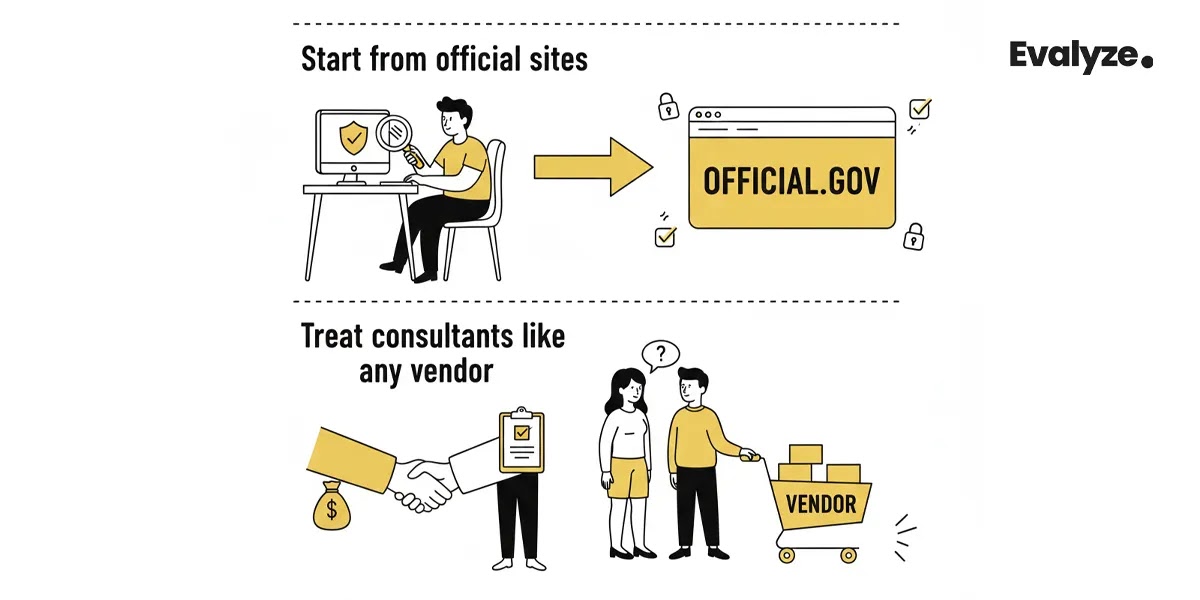
National: RVO (NL), Bpifrance, Enterprise Ireland, German federal ministries, etc.
Local: regional development agencies and city websites.
Treat consultants like any vendor
Some are helpful; some are pure "success fee" machines, copying and pasting your deck.
Don't sign away big equity chunks or pay huge retainers for generic work.
If you do use one, make sure they're working from the current official guidelines.
Before You Apply: A Simple Founder Checklist
When you're thinking, "Is this worth the time?", ask:
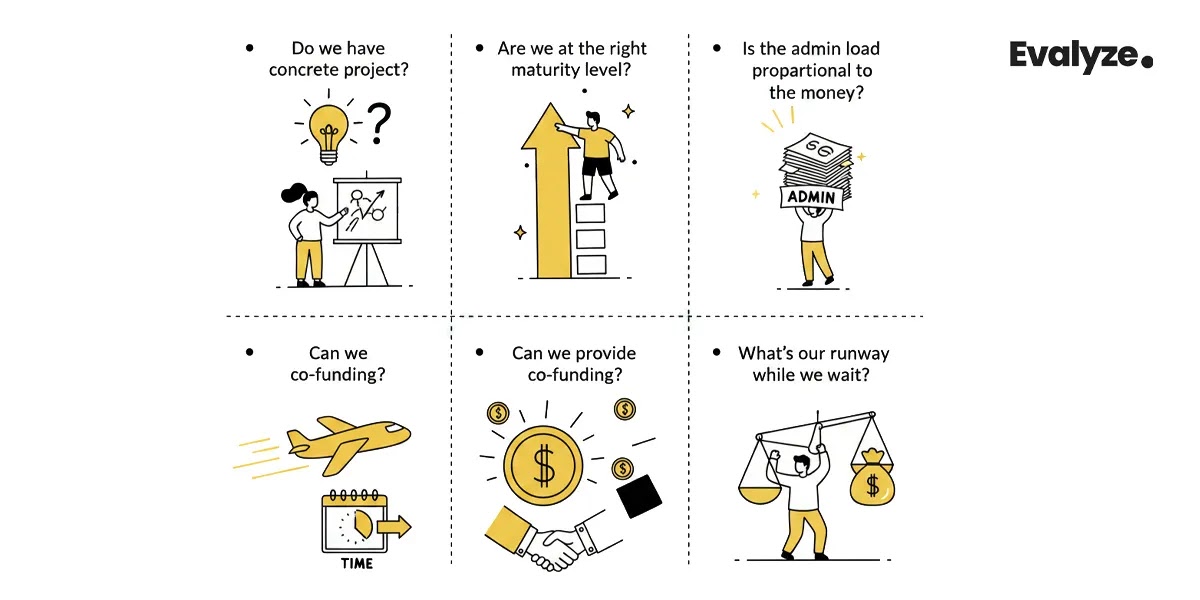
Do we have a concrete project?
Not "grow the startup", but "build X", "run trial Y", "enter market Z".
Are we at the right maturity level?
EIC Accelerator wants something close to TRL 5-8 (real prototype, early users).
EXIST, Bourse French Tech, and LEO Priming are more pre-seed / feasibility level.
Can we provide co-funding?
Many grants cover only 40-60% of costs. If you can't fund the rest (from revenue, angels, or your own savings), the project might stall.
Is the admin load proportional to the money?
Filling a 40-page EIC application for a tiny ask is a bad trade.
Spending a day on an IP voucher that saves you €1,000 can be excellent.
What's our runway while we wait?
Public programmes can take months from application to contract.
Assume grant cash arrives later than you'd like, not when you desperately need it.
If a grant doesn't line up with your real roadmap, skip it. The worst trap is "we redesigned our entire product just to fit a call text".
How Grants Fit Into Your Funding Stack (and Where Evalyze Helps)
Grants and tax incentives don't replace fundraising; they change the shape of it:
Use them to:
Pay for R&D, pilots, clinical studies, export missions, and key early hires.
Turn a sketch into a prototype, and a prototype into real-world data.
Then raise from:
Angels and VCs, once you can show traction, de-risked tech, and public co-funding as a credibility signal.
That's where Evalyze comes in:
You use grants to buy time and proof points.
Then you plug your deck into Evalyze.ai, clean up the story, benchmark it, and build a targeted investor list that cares about your sector and region, including funds that like public co-funded startups.