
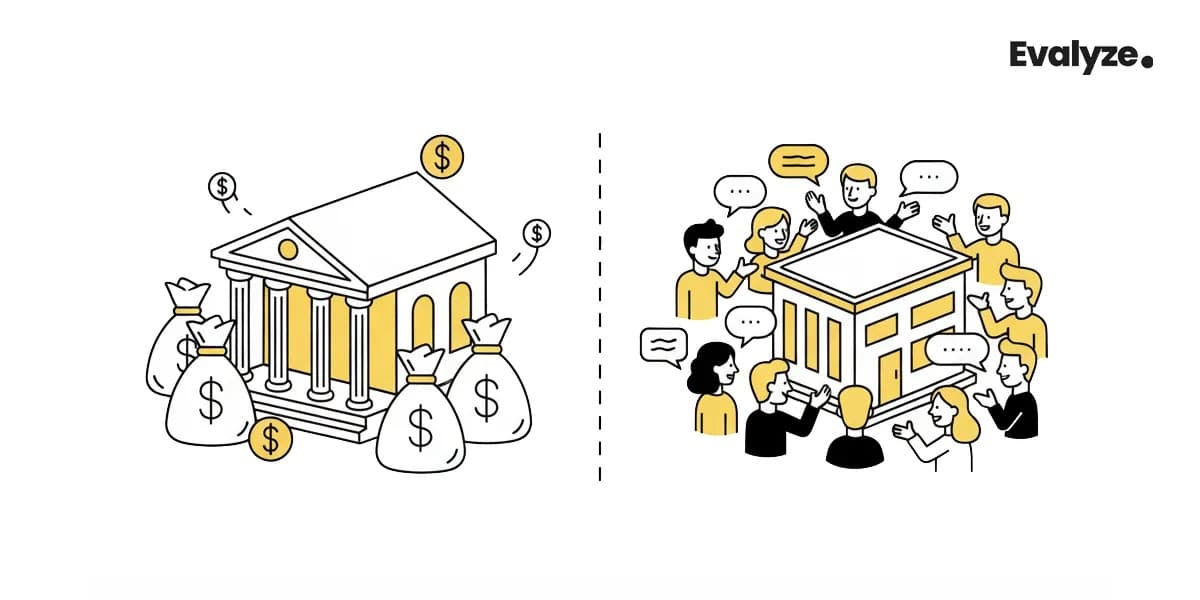
Micro VCs vs. Traditional VCs: Which Is Right for Early-Stage Founders?
A practical founder guide to choosing micro VCs vs traditional VC funds, check size, speed, follow-on support, and a simple decision worksheet.
December 16, 2025
What to automate in fundraising (CRM, follow-ups, data rooms) and what not to. A trust-first playbook that won’t look like a bot farm.
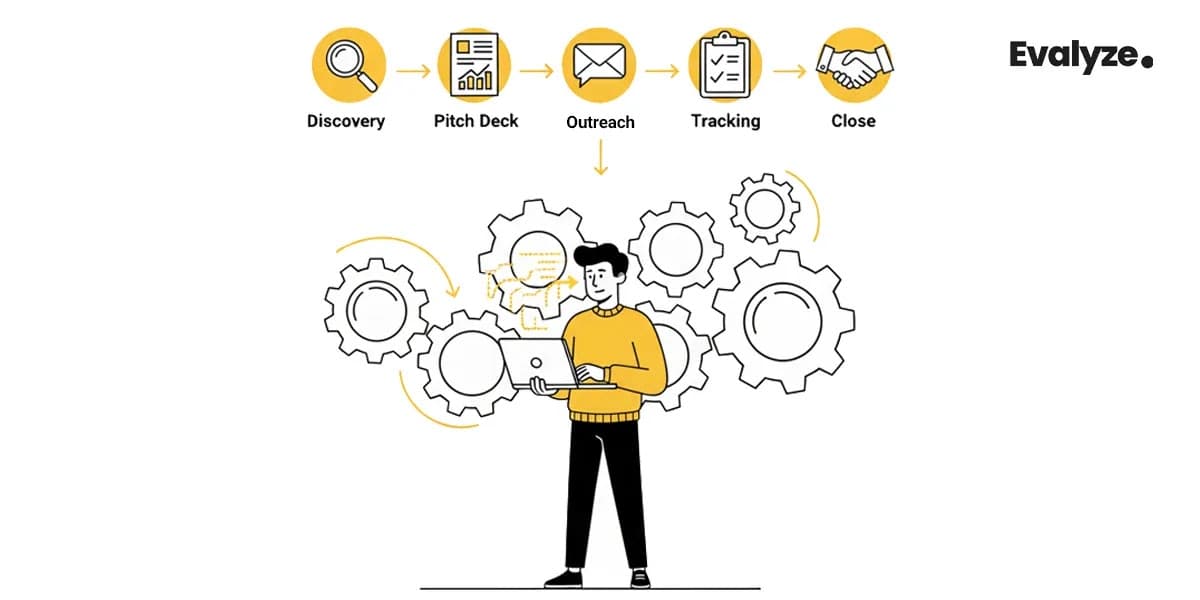
Investors fund clarity and confidence, and your process should reflect that. The point of fundraising automation for startups isn’t to send more messages; it’s to remove the operational drag that slows a round down: messy tracking, missed follow-ups, outdated docs, and inconsistent updates.
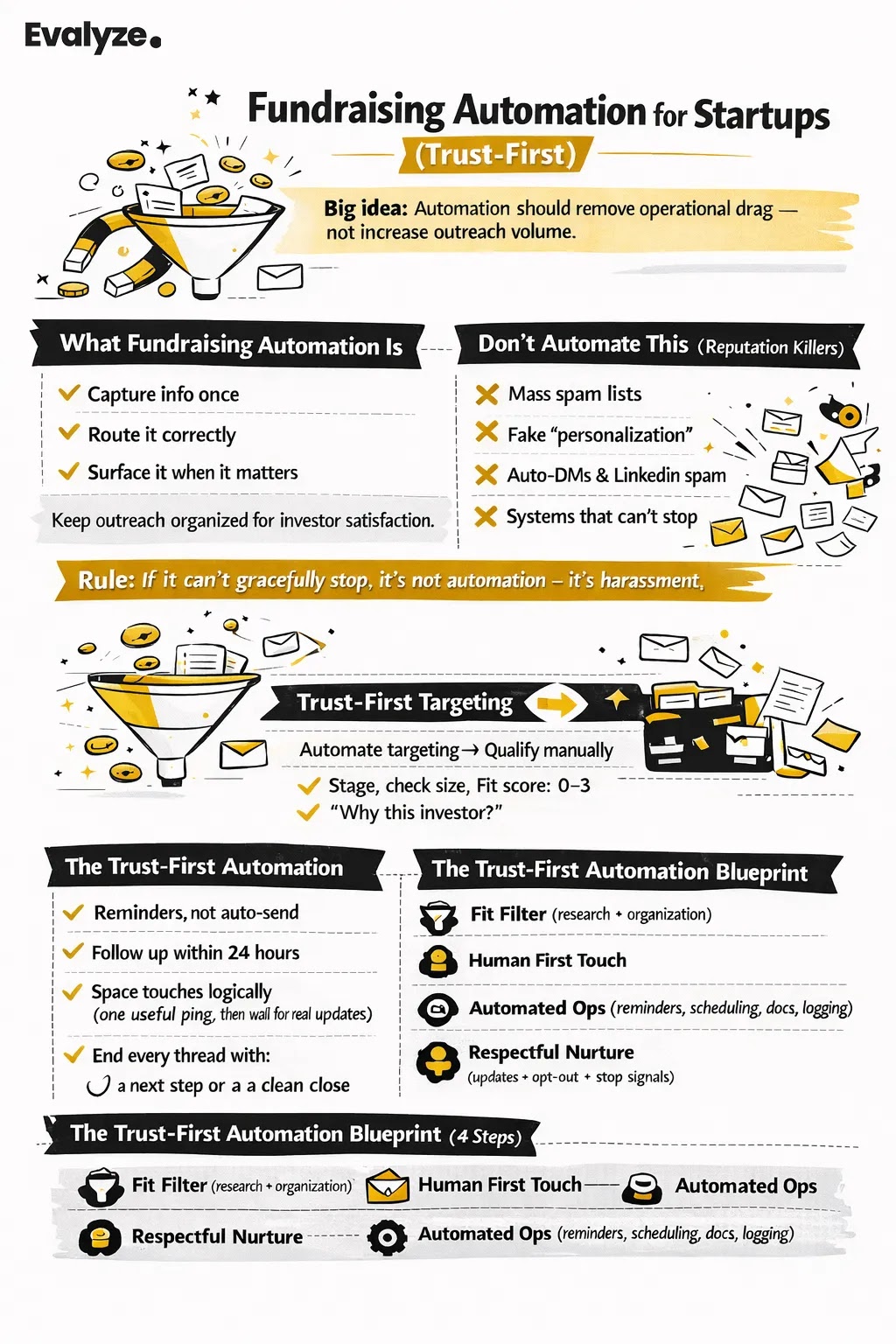
Fundraising automation is a set of behind-the-scenes workflows that keep everything moving without you micromanaging every step. You capture information once, route it correctly, and surface it when it matters so your outreach stays organized, and your investor experience stays clean.

Next read: 20 AI Fundraising Tools for Startups
You don’t win rounds by “reaching out to everyone.” You win by talking to the few investors who are already wired to understand your business. Automation helps you get ruthless about that.

Pull the boring fields automatically from your CRM or database:
Then add one manual checkpoint before outreach: a fit score (0-3) plus a short “why this investor” note.
No reason, no send. This single rule prevents list bloat, keeps your outreach defensible, and makes “no” decisions faster.
To build your fit-score list faster, Evalyze.ai filters investors by stage, sector, and cheque size, while you handle why and outreach.
Popular on Evalyze: How to Build an Investor List Based on Your Startup
Warm intros aren’t magic; they’re logistics. Set a workflow like: Find mutual → Draft a 4–6 line intro request → Track who you asked and when → Nudge once → Close the loop
Make it easy for the connector: include your one-liner, why this specific investor, and the exact ask. If it’s a pass, log it and move on.
Most founders treat deliverability and compliance like “later” problems. Investors treat them like a competence signal. If your email lands in spam, looks spoofable, or can’t be unsubscribed from cleanly, you don’t just lose a reply, you lose credibility before you’ve even earned a “maybe.”

Set up SPF, DKIM, and DMARC, and make sure the sending domain aligns with what’s in your “From” address. This reduces the risk of spoofing and makes you less likely to be filtered or rejected by inbox providers. Gmail explicitly calls out authentication requirements, especially for higher-volume senders.
Bake a pre-flight “deliverability checklist” into your workflow:
If your outreach counts as a commercial electronic message (CEM), CASL isn’t optional: you need consent (or a valid basis), clear identification, and a working unsubscribe mechanism, and you must honour unsubscribe requests within 10 business days.
Add a consent basis field in your CRM (express/implied/unknown) and block sends when it’s unknown. That one gate prevents “accidental spammer” mode.
Worth bookmarking: 7 Investor Follow-Up Emails
Follow-ups are where fundraising quietly dies, not because founders don’t care, but because the process leaks. The fix isn’t “more sequences.” It’s making sure nothing falls through while still sounding like a person.
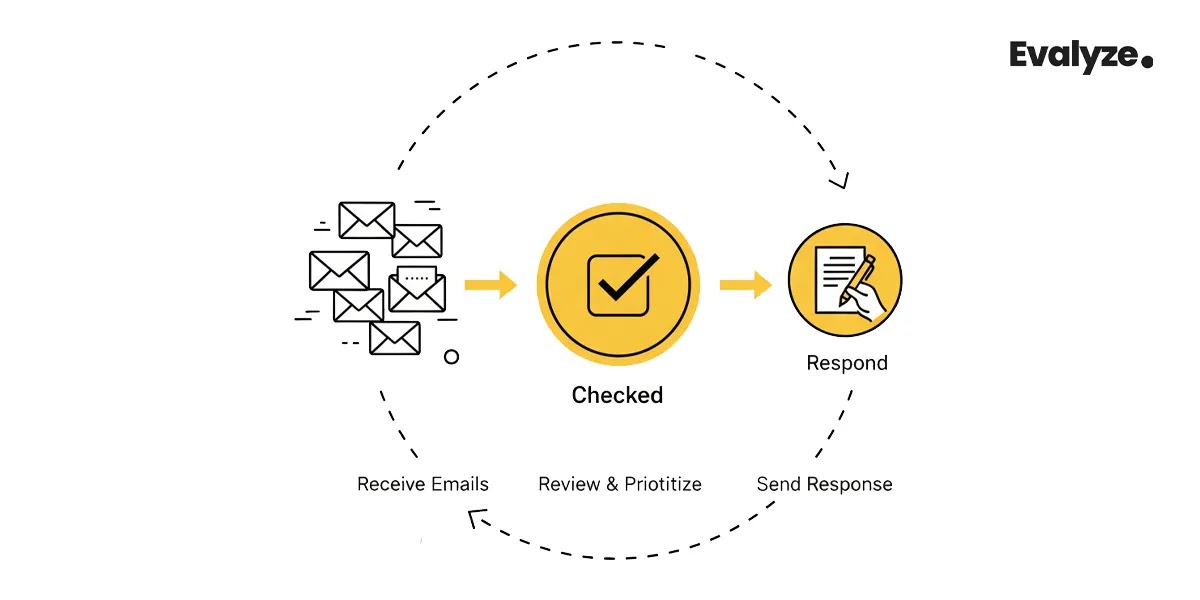
Use automatic reminders, not automatic sending. Follow up quickly after a meeting, ideally within 24 hours, and set expectations during the call (“I’ll send notes this afternoon” / “I’ll follow up tomorrow”). Hustle Fund explicitly recommends sending a follow-up ASAP and setting a clear timeline.
Then space touches logically (e.g., one helpful ping after a few days, then wait for a real update).
Automate the admin: calendar links, agendas, and the “promised items” pack (deck, memo, data room link).
The human part is adding a next step or close-out rule so every thread ends with either:
Keep learning: AI-Powered Investor Outreach: What Works and What Doesn't
A data room is where “interesting” turns into “prove it.” The fastest way to stall a round is to make investors chase docs, wonder which file is current, or get a Dropbox link that feels like a junk drawer.
Set up a version-controlled structure (clear folders + naming conventions) and treat it like a product feature: always ready, always current.
Both Drooms and Visible’s checklists converge on the same core set of documents investors expect during diligence:
So build auto-reminders that flag what’s missing or stale before anyone asks.
Then use permissions and audit trails to share quickly without oversharing:
Instead of dumping everything, auto-generate a small pack by stage:
It feels curated, and curation reads as competence.
Explore more: How to Adapt Your Pitch Deck for Virtual Investor Meetings
Investor updates are the opposite of spam when they’re predictable, honest, and useful. Set a monthly or quarterly cadence and keep the format consistent with core metrics, wins, risks, and a short list of specific asks.

Automate the parts that shouldn’t require willpower:
Keep the ask human and concrete. “Intro to 2 fintech angels in Toronto” beats “Any help appreciated.”
Don’t miss: How to Use Evalyze Investor Discovery
Automation goes wrong the moment it tries to pretend to be human.

The Rule: If your system cannot gracefully stop when someone isn’t interested, it isn’t automation, it is harassment.
Too useful to skip: 5 Reasons Why Startups Fail at Fundraising
This plan shows you how to use technology to grow your fundraising process while keeping investor trust.
Evalyze.ai can surface investors that match your stage, sector, and cheque size, so you spend your time on the “why” and the outreach, not list-building.
FAQ
A practical founder guide to choosing micro VCs vs traditional VC funds, check size, speed, follow-on support, and a simple decision worksheet.
December 16, 2025

Find the hubs where investors respond and where you can actually build.
December 17, 2025