
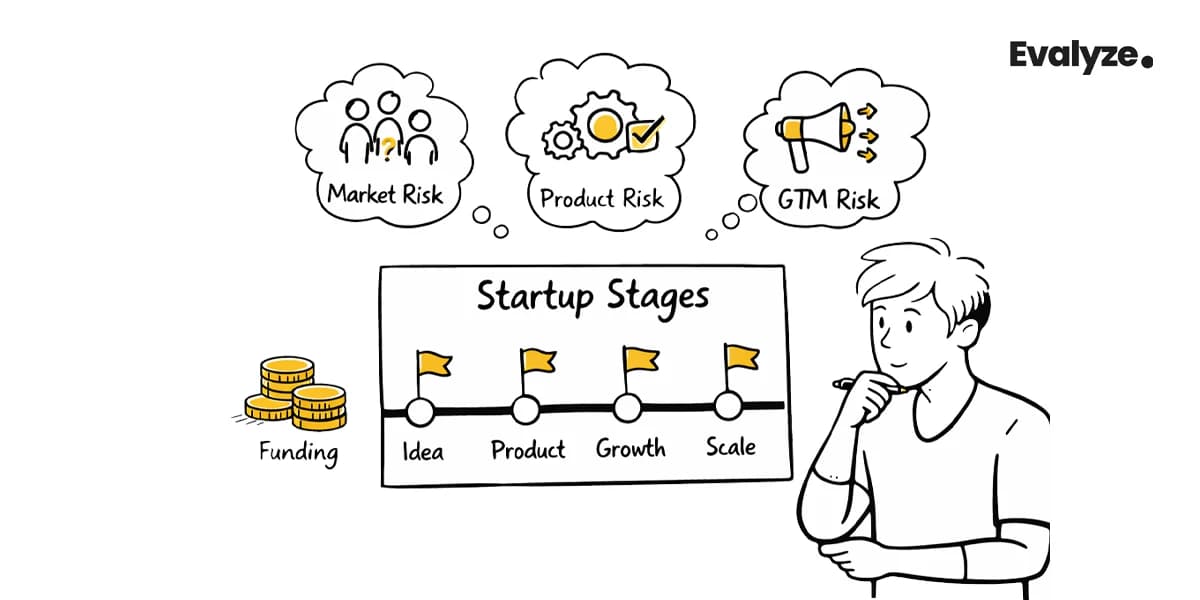
Startup Stages Explained: A Practical Guide from Idea to Scale-Up
Master the 6 startup stages from Idea to Scale-Up. Learn how to de-risk your business and what "proof" investors want from Pre-Seed to Series D+.
February 15, 2026
Understanding SAFE agreements in startup funding. See how valuation caps, discounts, and trigger events work in early-stage fundraising.
If you're a startup founder trying to raise early money, you've probably heard the term SAFE thrown around at pitch events, in term sheets, or in Slack groups. But what exactly is SAFE, how does it work, and should you use one?
Key Takeaway
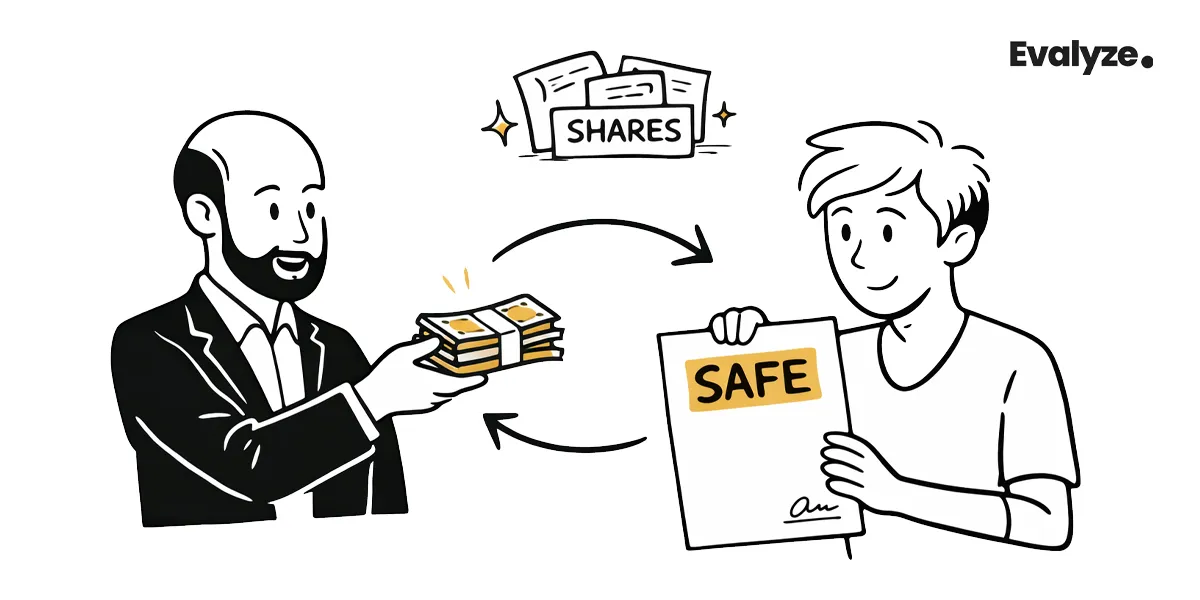
SAFE stands for Simple Agreement for Future Equity. It's a short legal contract between a startup and an investor. The investor gives you money today, and in return, they get the right to receive equity (shares) in your company later, usually when you raise a bigger funding round.
The SAFE was created in 2013 by Y Combinator, the famous startup accelerator behind Airbnb, Dropbox, and Stripe. Their goal was to make early-stage investing simpler, faster, and cheaper for both founders and investors.
Think of a SAFE like a rain check at your favorite restaurant. The investor hands you cash now and gets a promise that when the restaurant is officially 'open for equity' (i.e., your Series A round), they'll get a seat, usually at a discount.
🔑 Key Point:
A SAFE is not a loan. It has no interest rate and no repayment deadline. It is a contract that converts into shares at a future event.
Good to Know: What are Startup Stages?
When you sign a SAFE with an investor, three key terms typically define the deal:
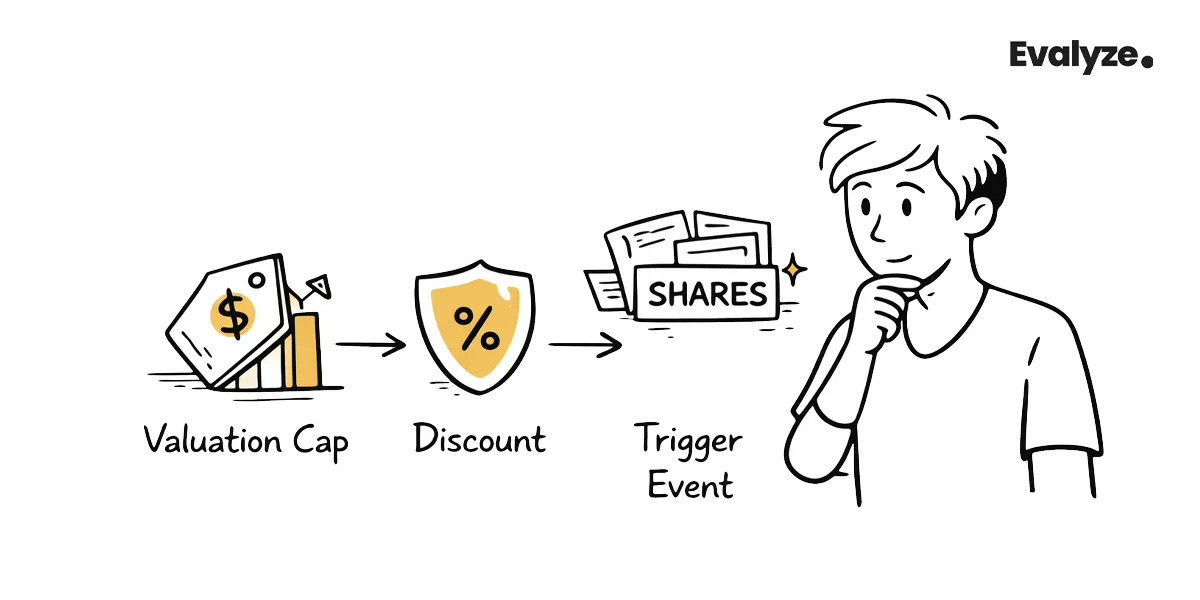
The valuation cap is the maximum company valuation at which the investor's SAFE converts into shares.
It protects early investors: if your startup takes off and raises its Series A at a sky-high valuation, the SAFE investor still converts at the lower, capped price, meaning they get more shares for the same money.
📌 Example:
An investor puts in €100,000 on a SAFE with a €2M valuation cap. When you raise your Series A at a €10M valuation, their SAFE converts at €2M, giving them 5% of the company, not 1%.
A discount rate gives the SAFE investor the right to convert their investment into shares at a set percentage below the price of the next funding round. It's a reward for taking an early risk.
📌 Example:
A 20% discount rate means that if Series A shares are priced at €1.00, the SAFE investor pays only €0.80 per share. Same money, more equity.
A SAFE doesn't convert automatically; it needs a trigger event. The most common triggers are:
This matters if you’re fundraising: Startup Fundraising Checklist
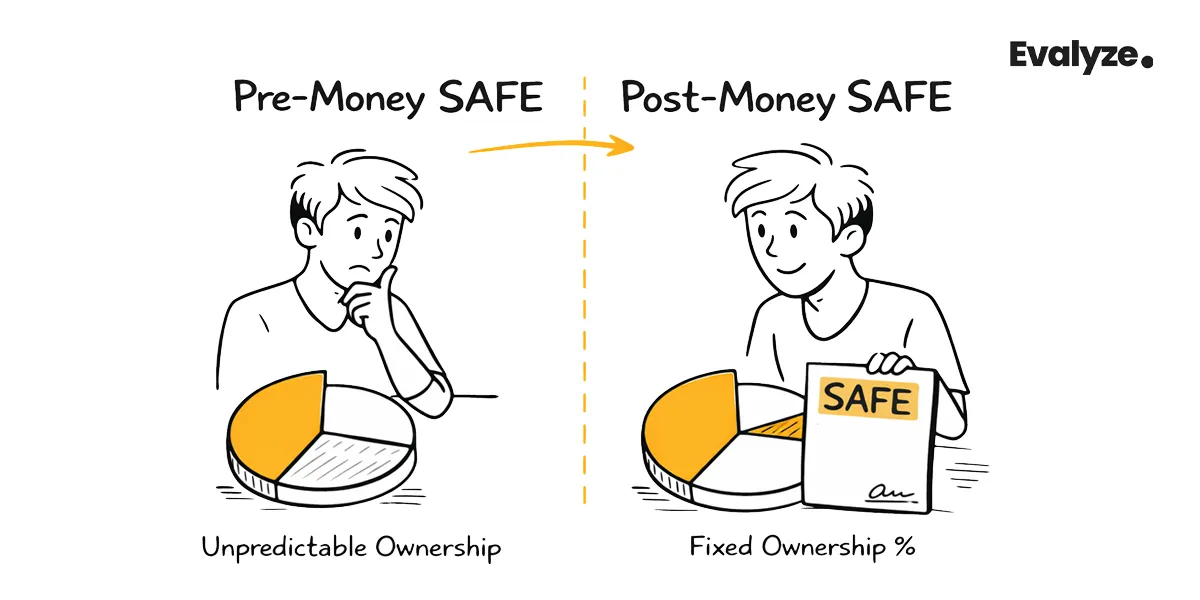
This is one of the most important distinctions, and the one founders often miss. It determines how much of your company each SAFE investor will own after conversion.
💡 Founder tip:
Most SAFEs today use the post-money format because it's more transparent and predictable for everyone involved.
Keep learning: How Much Money to Raise at the Seed Stage
Both instruments delay setting a company valuation. But there are key differences founders should know.
| Feature | SAFE | Convertible Note |
|---|---|---|
| Is it a loan? | No | Yes |
| Interest accrues? | No | Yes |
| Maturity / Deadline? | No | Yes |
| Converts to equity? | Yes | Yes |
| Simpler paperwork? | Yes | No |
The bottom line:
SAFEs are simpler and faster to execute, making them the preferred choice for most early-stage funding. Convertible notes may still make sense in regions or situations where SAFEs have less legal precedent.
What to read next: Top 20 Fintech VCs for Seed-Stage Startups
For startup founders, SAFEs offer several real advantages:
Take the next step: 20 AI Fundraising Tools for Startups
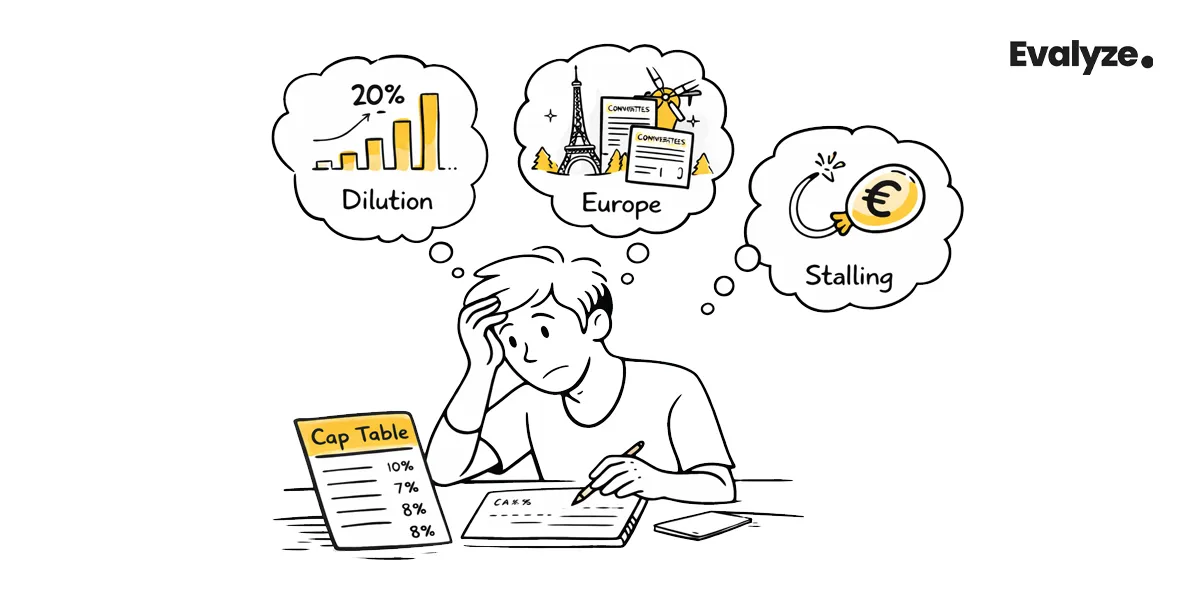
SAFEs aren't without trade-offs. Here's what founders should watch for:
A SAFE can shape your future ownership.
Make sure your raise is structured strategically. Analyze your deck, clarify your milestones, and connect with the right investors using Evalyze.ai.
A Simple Agreement for Future Equity is one of the most powerful tools in a founder's fundraising toolkit. It lets you raise money fast, without giving investors full equity rights yet, and without the legal complexity of a priced round.
Used correctly with a well-set valuation cap and a clear understanding of your cap table, a SAFE can be the springboard that gets your startup to the next level.
If you're preparing for your first raise, start by downloading Y Combinator's free SAFE template and discussing it with a startup-experienced lawyer. The paperwork is simple, but the implications are significant.
FAQ
Master the 6 startup stages from Idea to Scale-Up. Learn how to de-risk your business and what "proof" investors want from Pre-Seed to Series D+.
February 15, 2026
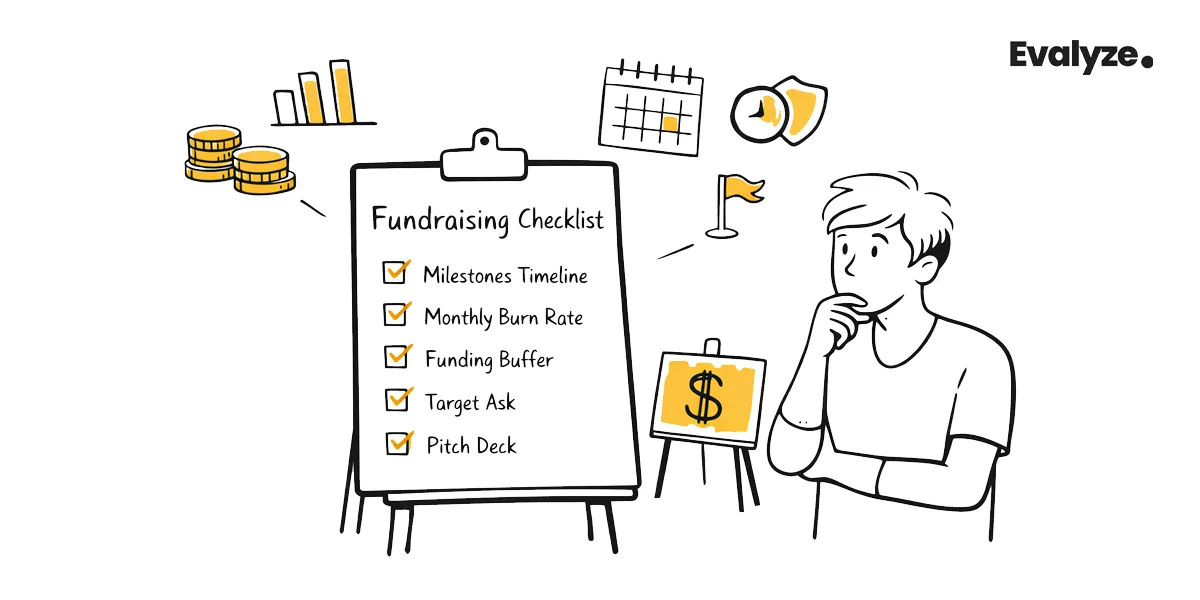
Use this startup fundraising checklist to prepare your pitch deck, financial model, and investor outreach strategy step by step.
February 18, 2026