
How Much Money Do You Need To Raise At The Pre-Seed Stage?
Learn how to calculate your pre-seed funding ask using runway, burn rate, milestones, and market benchmarks.
February 7, 2026
Learn how much money to raise at the seed stage using a clear, step-by-step process based on milestones, runway, costs, and risk.
Founders ask, “How much money to raise at the seed stage?” and then Google the average seed round sizes.
The problem is simple:
Internet numbers do not know your product cycle, hiring needs, sales motion, or risks.
If you copy a “typical seed round size,” you might raise too little and run out of cash before real proof shows up or raise too much and create avoidable dilution and pressure.
A strong seed ask is not a trend. It is a milestone-backed budget with a clear runway and a clear use of funds. Investors do not need you to be perfect.
They need you to be specific, realistic, and consistent:
Below is a simple process you can reuse for any seed round, in any country.
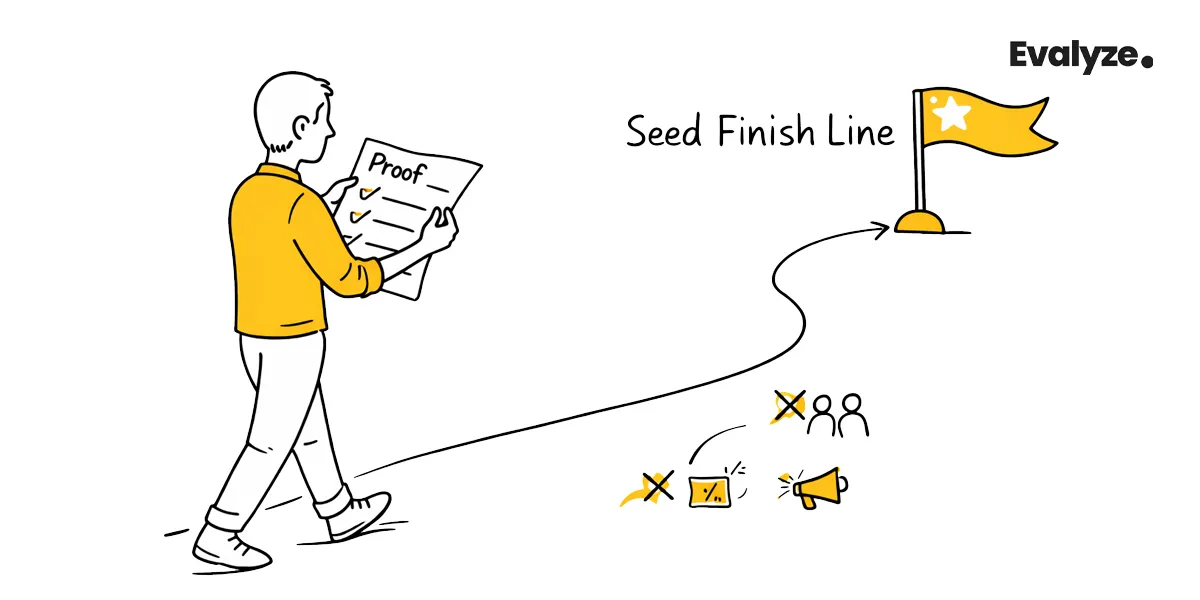
Seed funding is supposed to buy you time and resources to reach a meaningful next step. That next step is your finish line for the round.
Your finish line should answer one question:
What proof will make the next round easier (or make us sustainable without one)?
Examples of seed milestones (to Series A) by business model:
A good finish line is not “grow users” or “build features.” It is a clear business outcome that reduces investor doubt.
Recommended for you: How Much Money Do You Need To Raise At The Pre-Seed Stage?
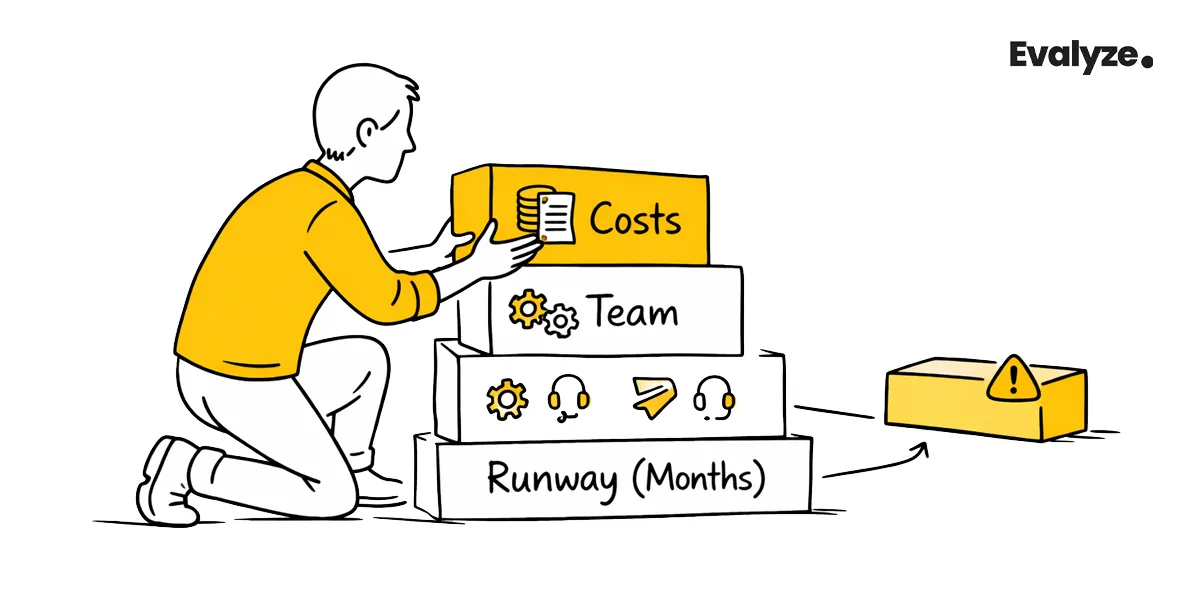
Seed runway is how long your cash lasts, measured in months. There is no universal correct number. You choose a runway based on how long it takes for your finish line to reach.
A practical way to choose:
If you sell to enterprises, your cycle may be longer. If you’re regulated, timelines are longer. If you are product-led and self-serve, cycles can be shorter.
Trade-offs:
Choose runway like an operator, not like a gambler.
Your seed round should fund the minimum team that can reach the finish line. Founders often over-hire because it feels like progress. Investors often worry about over-hiring because it creates burn that is hard to reverse.
Build your team plan by roles and timing:
Typical role buckets:
Avoid hiring “nice-to-have” roles early (heavy management layers, brand teams, large admin functions) unless your model truly demands it.
Your budget must use fully-loaded cost, not base salary. Fully-loaded cost includes:
A simple rule:
If you cannot explain how you estimated costs, investors will assume the number is optimistic.
These line items often surprise founders:
Write them down. Then be honest about what grows with scale.
Practical guide: Fundraising Automation for Startups
Your seed funding amount should come from a simple structure:
Total Cash Needed = Ramping Burn + Fixed Costs + One-Time Costs + Buffer
What each term means:
If your burn changes over time, do not use one monthly burn number. Build a month-by-month view. It can be simple: 18 rows in a sheet is enough.
Investors trust founders who plan for reality.
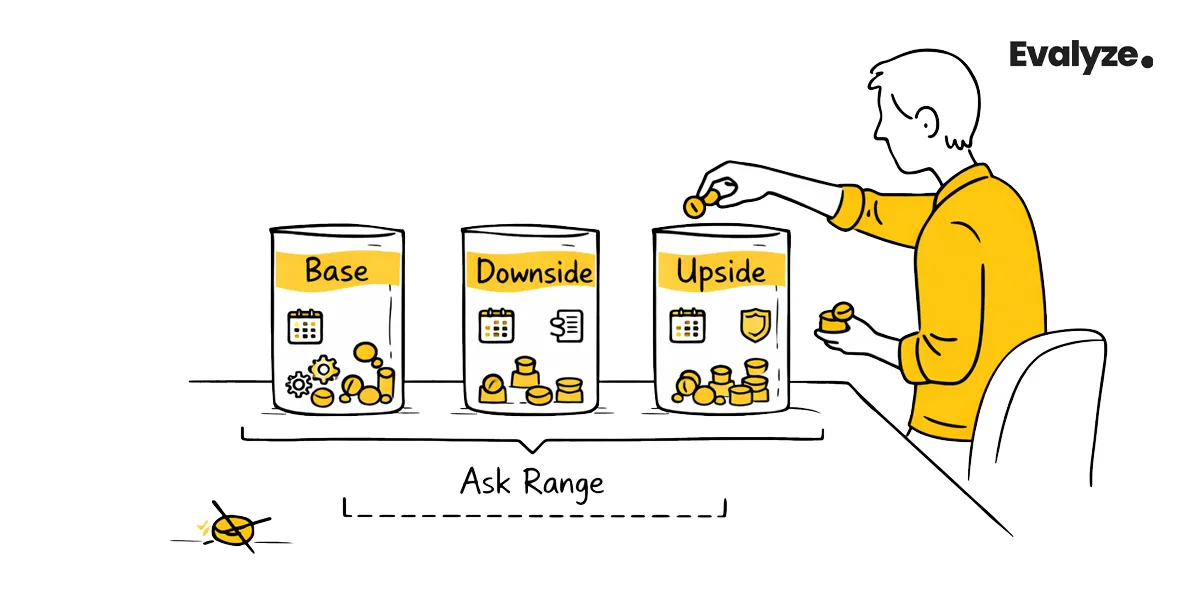
Create three scenarios:
For each scenario, decide in advance:
That last point matters. If you cannot explain what you would cut first, your plan is not prioritized.
Your output should be an ask range, not one fragile number.
For example: “We’re raising $X-$Y depending on how quickly we scale GTM after product validation.” The range must still be tied to a clear plan, not vague flexibility.
Save this for later: How to Build an Investor Funnel + Template
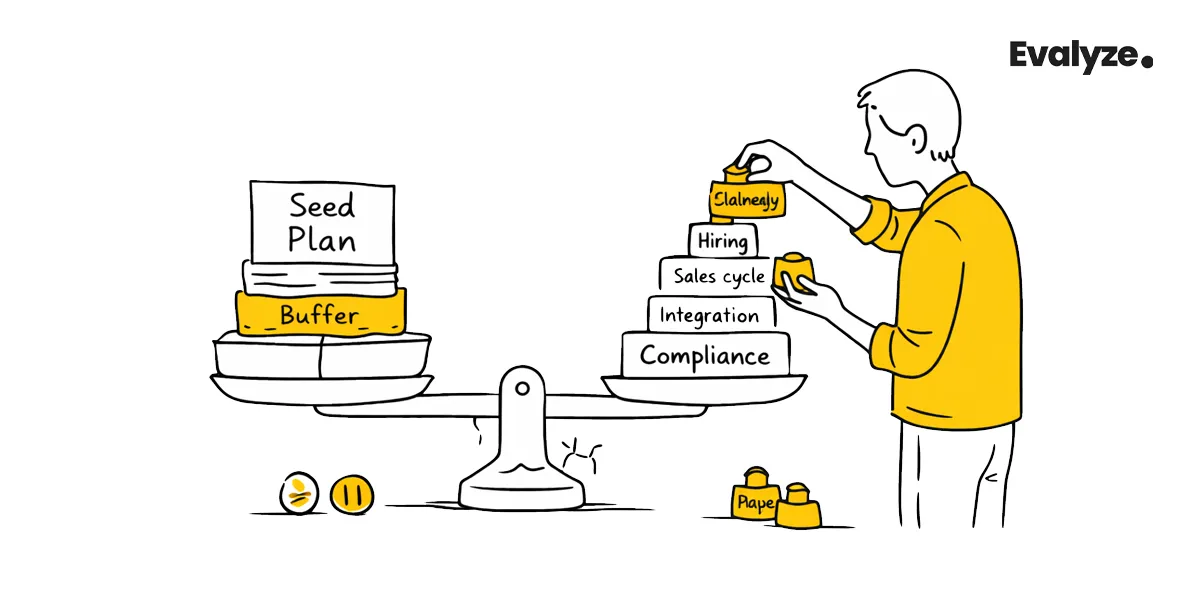
Most seed plans fail on time, not on talent. Stress-test your plan for:
If one delay breaks your runway, you are under-raising.
A buffer is not “just in case.” It should cover known risks such as:
The key is to say what the buffer is for. Investors are fine with buffers when they are logical.
You do not need a full ownership lecture in a seed-budget post. But you do need to avoid regret.
Ask yourself:
Your seed ask should protect your ability to raise again, not trap you.
From the founder toolkit: Pre-Seed Fundraising Checklist
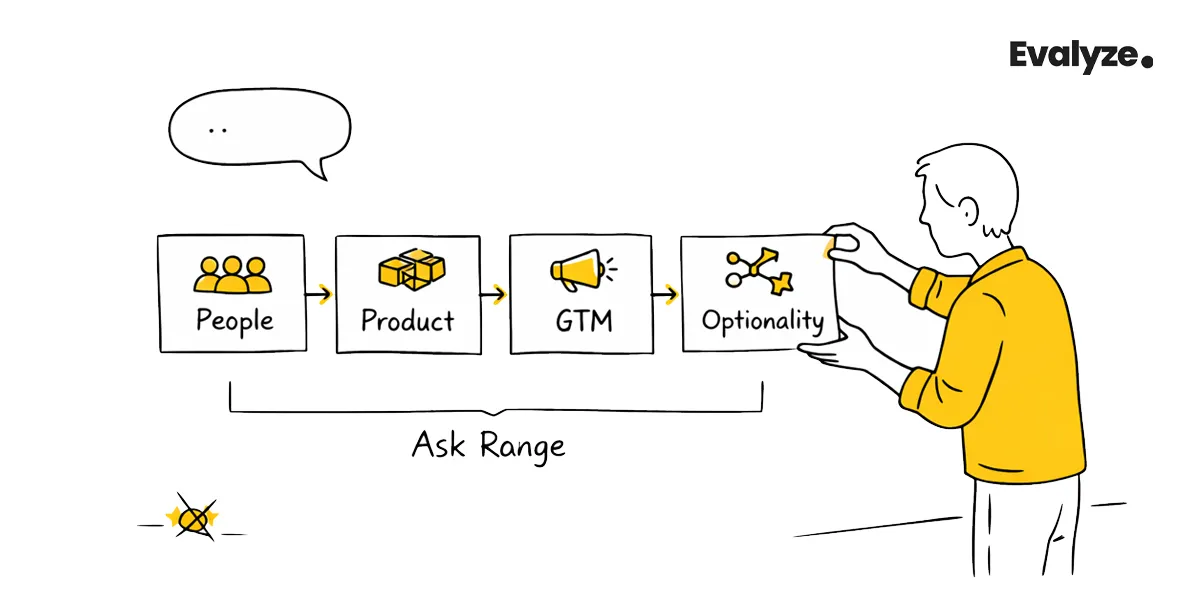
A clean “use of funds” is not a pie chart. It is a logical chain:
People → Product → GTM → Proof → Optionality
Your ask should be one sentence that links money to outcomes:
“We’re raising $X to get Y months of runway and achieve Z targets that unlock our next round.”
Then you support it with:
Investors get nervous when they see:
Prevent these by keeping the plan focused and easy to audit.
Don’t miss this: 20 AI Fundraising Tools for Startups
Use these questions to build your seed fundraising strategy and avoid guessing:
If you can answer these clearly, you will sound like a founder who can execute.
The right seed raise is not the number you saw in a tweet. It is a clear answer to what proof you will deliver, how long it will take, and what it will cost, with realistic risk coverage.
If you do the work, finish line, measurable targets, bottom-up budget, three scenarios, and a clean use-of-funds story, you will stop sounding like someone asking for money and start sounding like someone buying outcomes.
1. How much seed funding do I need if I’m pre-revenue?
Pre-revenue does not mean you cannot raise seed. It means your proof must be different. You may be proving retention, pipeline, pilots, usage depth, or regulatory progress.
Build the budget the same way: finish line → targets → team → costs → scenarios.
Your seed funding amount should still be tied to milestones, not revenue alone.
2. How do I decide between 15, 18, and 24 months of seed runway?
Choose the runway based on the cycle time. If your product, sales, and proof cycles require longer cycles (enterprise, regulated, complex onboarding), you may need more runway. If your loops are fast (self-serve, quick iteration), you can run leaner. The best runway is the one that gets you to the proof with room for delays, without turning the round into comfort money.
3. Should I raise more now to avoid a bridge later?
Sometimes, but not always. A larger seed can reduce fundraising distraction, but it increases pressure and potential dilution. The better rule is this: raise enough to hit the next meaningful proof point with a real buffer. If your plan needs “more,” mainly because timelines are uncertain, fix the plan or tighten the milestone; do not only increase the number.
4. How do I justify my seed funding amount if it’s above “typical” numbers?
Do not argue with benchmarks. Explain the cost of your finish line. If you are regulated, enterprise, or infrastructure-heavy, show why the proof requires more time and specific hires. Investors will accept a larger number when it is tied to a believable milestone plan and when fund use is disciplined.
Learn how to calculate your pre-seed funding ask using runway, burn rate, milestones, and market benchmarks.
February 7, 2026

A practical pre-seed fundraising checklist, readiness scorecard, traction milestones, cheque sizes, investor types, SAFE terms, and pitch focus, plus a clean plan.
January 7, 2026