
Why Early-Stage VCs Say No to 99% of Startups
Rejection is part of the startup journey; feedback, resilience, and constant improvement can guide you to the right investment
May 5, 2025
Learn how investors evaluate startup readiness and the six signals that help founders build confidence before raising funding.
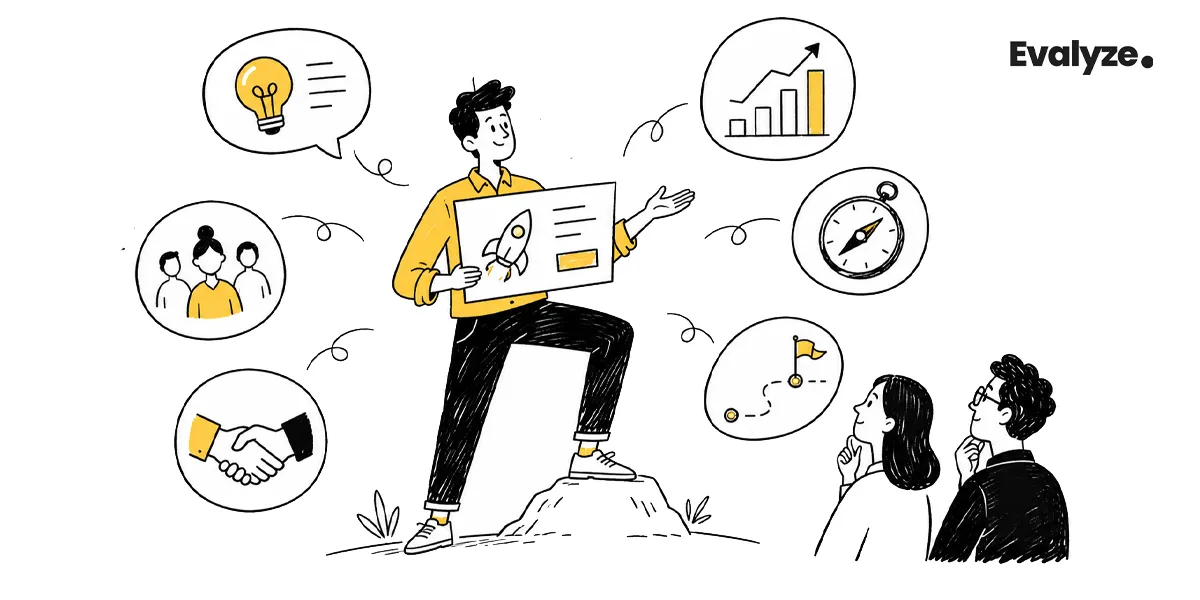
A startup is investor-ready when investors can quickly understand the opportunity, see evidence that the company is moving in the right direction, trust the founding team, and understand what the next funding round will achieve.
Key Takeaways
Investor readiness means reducing uncertainty for investors before they decide to take a meeting.
VCs usually evaluate six areas: startup story, market evidence, competitive understanding, team strength, fundraising plan, and investor fit.
A startup does not need perfect metrics to be investor-ready. The right evidence depends on the company's stage.
Strong founders do not hide risks; they show they understand them and have a plan to address them.
Investor readiness helps founders spend time with investors who are more likely to understand their opportunity.
Investors review hundreds or thousands of startups. Before spending time on a meeting, they look for signals that help answer a few basic questions:
Is this a large enough opportunity?
Does this team have a realistic chance of building the company?
Is there evidence that customers need this product?
Does this startup have a reason to win?
Does this opportunity fit our investment strategy?
The exact answer changes depending on the investor.
A pre-seed investor may focus more on founder-market fit, early validation, and the size of the opportunity.
A Series A investor may focus more on revenue growth, retention, and repeatable customer acquisition.
Investor readiness is not a fixed checklist. It changes with your stage.
| Investor Signal | What It Helps Investors Understand |
|---|---|
| Startup story | Is the opportunity clear and worth exploring? |
| Market evidence | Is there proof that customers need this solution? |
| Market and competition | Does the startup understand why it can win? |
| Team strength | Does the founding team have the ability to execute? |
| Fundraising plan | Will this capital create meaningful progress? |
| Investor fit | Is this opportunity aligned with the investor's strategy? |
For a deeper look at how investors think during evaluation, read How Venture Capitalists Really Think.
Before investors evaluate numbers, they need to understand the opportunity.
A strong startup story answers:
What problem are you solving?
Who has this problem?
Why does this problem matter now?
Why is your company positioned to solve it?
Many founders explain their product first. Investors usually need more context. A product description alone does not show why the company deserves attention.
Compare these two explanations:
Less clear:
"We use AI to improve business workflows."
More specific:
"We help mid-sized logistics companies reduce manual shipment reconciliation by automating invoice matching."
The second explanation gives investors more information:
Who the customer is,
What problem exists,
What value the product creates.
A clear story helps investors understand the opportunity before they start analyzing details.
Learn how to structure that narrative in How to Write a Pitch Deck Storyline to Get You Funded.
Investors need evidence that the company is solving a real problem. The type of evidence depends on your startup stage.
Early companies may show:
Customer interviews,
Pilot agreements,
Waitlist growth,
Product usage,
Partnerships,
Early user feedback.
Investors may look at:
Paying customers,
Revenue growth,
Retention,
Repeat purchases,
Customer expansion.
Investors usually expect stronger proof:
Predictable acquisition,
Efficient sales process,
Customer retention,
Expansion opportunities.
A common mistake is focusing only on user numbers.
Investors are not only asking:
"How many users do you have, and what does that tell us about demand?"
They are asking:
"Does this evidence prove that customers need this solution enough to support a growing business?"
A startup with 500 highly engaged users may be more interesting than one with 50,000 inactive signups.
Investors care less about isolated numbers and more about what those numbers prove. Learn how to turn traction data into a stronger investor narrative in How to Present Startup Metrics in a Pitch Deck.
Investors do not expect founders to operate without competition. A strong founder understands the alternatives customers already use.
A strong founder should be able to explain:
A weak market explanation often sounds like:
"Our market is huge, and we only need a small percentage of it."
Investors hear this frequently.
A stronger explanation connects market size to customer behavior:
"Companies currently solve this problem with manual processes. Our product reduces the time required from several hours to minutes, creating a clear reason to switch."
The strongest founders understand both sides:
why customers buy,
why competitors struggle to copy.
These are the same factors investors look for when evaluating whether a startup has a compelling opportunity. Read more in What Are Investors Looking For in Pitch Decks?
At early stages, investors are investing heavily in the people building the company.
A strong team explanation goes beyond impressive backgrounds.
Investors want to understand:
Why are these founders solving this problem?
What experience gives them an advantage?
Why are they likely to handle challenges ahead?
A generic team statement:
"Our team has 20 years of combined experience."
does not tell investors much.
A stronger explanation:
"The founder previously managed supply chains for the exact customer segment this company serves and experienced this problem firsthand."
Relevant experience matters because it shows:
deeper customer understanding,
faster learning,
better decision-making.
A founder does not need a famous background to build investor confidence. They need a clear connection between their experience and the problem they are solving.
Explore the decision-making process behind investor thinking in Investor Psychology: How to Think Like a VC and Secure Funding.
Investors want to understand why you are raising money now.
A fundraising-ready startup can explain:
How much capital are you raising?
What milestone will this funding help achieve?
Why is this the right amount?
What changes after reaching that milestone?
A funding round should have a purpose.
For example:
A founder raising $1 million should be able to explain what that capital creates:
a finished product,
initial customer traction,
a larger sales team,
expansion into a new market.
The strongest fundraising conversations connect money to progress.
A strong fundraising plan connects the amount raised to specific milestones and explains how the capital will help the company make meaningful progress.
Learn how to identify the right moment to raise in When's the Right Time to Seek Funding?
A strong startup is not automatically a fit for every investor. Investor fit matters because funds have different:
investment stages,
check sizes,
industries,
geographic focus,
portfolio strategies.
A founder building healthcare software may not be a good match for a consumer-focused investor, even if the startup has strong potential.
Many fundraising challenges happen because founders approach investors who are unlikely to invest.
A better approach is to understand:
Which investors invest at your stage?
Which investors understand your market?
Which investors write checks of your size?
Which investors have relevant portfolio experience?
The right investor list improves the quality of fundraising conversations.
Build a focused investor pipeline based on your startup's stage and goals with How to Build an Investor List Based on Your Startup.
Find the right tools to discover potential investors in Best Platforms to Find Investors for Startups.
Investors want to know what success looks like after the round.
A fundraising goal without a clear outcome creates uncertainty.
Instead of:
"We are raising money to grow."
Explain:
"This round helps us reach 20 enterprise customers and prove repeatable sales."
A great product does not automatically answer investor questions.
Investors also need to understand:
Market opportunity,
Business model,
Growth path,
Competitive advantage.
Different investors have different reasons for investing.
A message that works for a climate-tech fund may not work for a SaaS-focused investor.
Investor fit should influence your outreach strategy.
Every startup has risks. Investors are not expecting founders to have solved everything.
They want to see that founders understand:
What could go wrong,
Why it matters,
What steps they are taking.
Acknowledging a challenge often creates more confidence than pretending it does not exist.
Learn what causes early-stage investor rejection in Why Early-Stage VCs Say No to 99% of Startups.
Before contacting investors, use this checklist:
If several answers are unclear, the next step may be improving your company narrative and fundraising strategy before starting investor outreach.
Preparing for investors requires more than creating a pitch deck. Founders need to understand how their startup is positioned, which areas may raise investor concerns, and which investors are the right fit.
Evalyze helps founders review their pitch deck, identify improvement areas, assess investor readiness, discover relevant investors based on startup characteristics, and organize fundraising outreach.
By combining pitch deck analysis, investor discovery, and fundraising workflow tools, Evalyze helps founders move from preparation to investor conversations with a clearer strategy.
Before reaching out to investors, founders can use Evalyze to better understand their current position and prepare for stronger investor conversations.
FAQ
Rejection is part of the startup journey; feedback, resilience, and constant improvement can guide you to the right investment
May 5, 2025

Learn how to build an investor list with Evalyze.ai. Step-by-step guide to find matched investors, shortlist the best fit, and raise smarter.
September 22, 2025